Mineral feed for horses: useful or unnecessary?
Is good hay enough, or does my horse need mineral feed? We explain which trace elements are often lacking, why too much is harmful and how you can find the right product.
The feed shelves are lined with dozens of tubs of mineral feed, pellets, powders and salt licks. Many horse owners wonder whether their horse really needs all of this or whether good hay is enough. The honest answer is: it depends on the basic forage. In this article we explain when mineral feed makes sense, which nutrients are often lacking and why more is not automatically better.
Is good hay not enough to supply my horse with minerals?
Good hay covers a large part of the requirement for major minerals, but there is often a gap when it comes to some trace elements. The German Equestrian Federation (FN) states that a horse at maintenance requirement can in principle live on good hay in sufficient quantity. It also points out though that soils today are no longer as rich in nutrients as they used to be and that horses can hardly cover their requirements any more by selectively grazing on herbs.
According to the Chamber of Agriculture of Vorarlberg, the amount of minerals in hay depends on soil type, fertilisation, plant composition and cutting date. The more often a meadow is cut, the fewer trace elements the regrowth contains. Two batches of hay can therefore have very different compositions.
Which minerals are most commonly lacking in horses?
In particular the supply of selenium, copper and zinc through basic forage alone is often not sufficient. A paper from the University of Veterinary Medicine Vienna notes that the requirement for copper and selenium is often not covered in conventional rations and that the selenium content in basic forage tends to be below requirements. The magazine Reiter Revue states that soils in Germany are very poor in selenium. The content fluctuates widely even within a single region.
In addition to selenium, copper and zinc, the FN counts iodine, iron, cobalt and manganese among the essential trace elements. For the major minerals, the ratio of calcium to phosphorus is important. The FN gives a target of two parts calcium to one part phosphorus.
Does my horse need extra vitamin E in winter?
For stabled horses that eat mainly hay, this is often the case. Due to cutting, drying and storage, hay contains significantly less vitamin E than fresh grass, and the content continues to decrease the longer it is stored. Horses on good pasture are usually better supplied. According to feed manufacturer Iwest, anyone feeding oil should also think about a little more vitamin E.
Can I oversupply my horse with mineral feed?
Yes, and this happens more often than you might think. The FN warns that an oversupply of trace elements can even have fatal consequences. With selenium, the gap between a useful amount and a harmful dose is small. In Reiter Revue, feeding expert Prof. Ellen Kienzle from LMU Munich emphasises that no horse benefits from exceeding the recommendations for selenium supply. Excessive amounts can cause lameness, hair loss in mane and tail and changes in the hoof horn.
The most common cause is double provision. Many horses receive a hard feed or muesli that already contains added minerals and on top of that a mineral feed. The Vienna paper cites a study in which the majority of the horses examined were oversupplied with copper and some with selenium. In addition, too much of one nutrient can inhibit the absorption of other minerals. It is therefore always worth looking at the analysis on all feed labels.
Mineral feed, lick or salt lick: what is the difference?
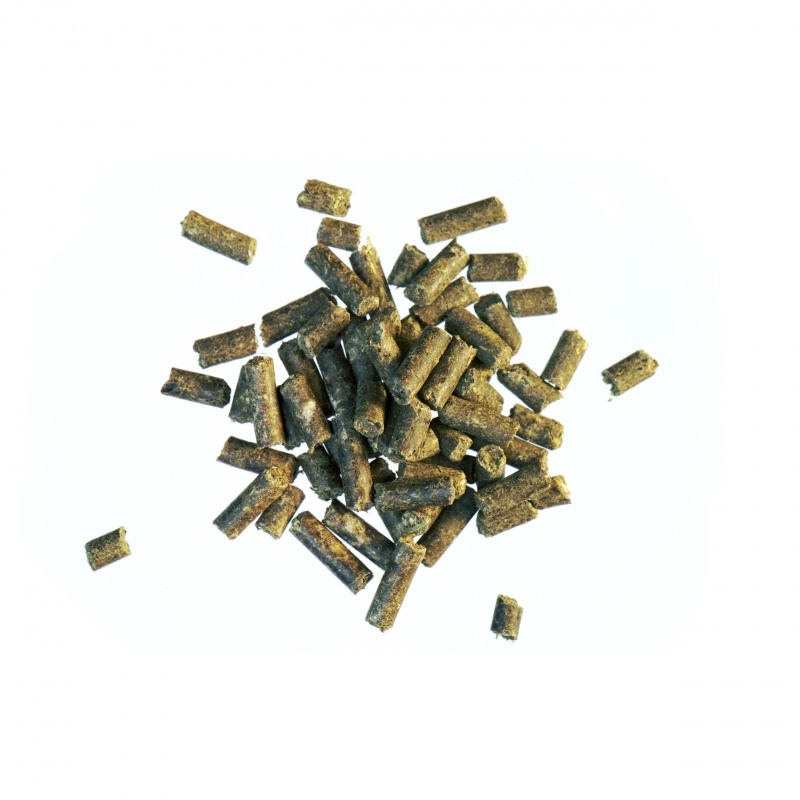
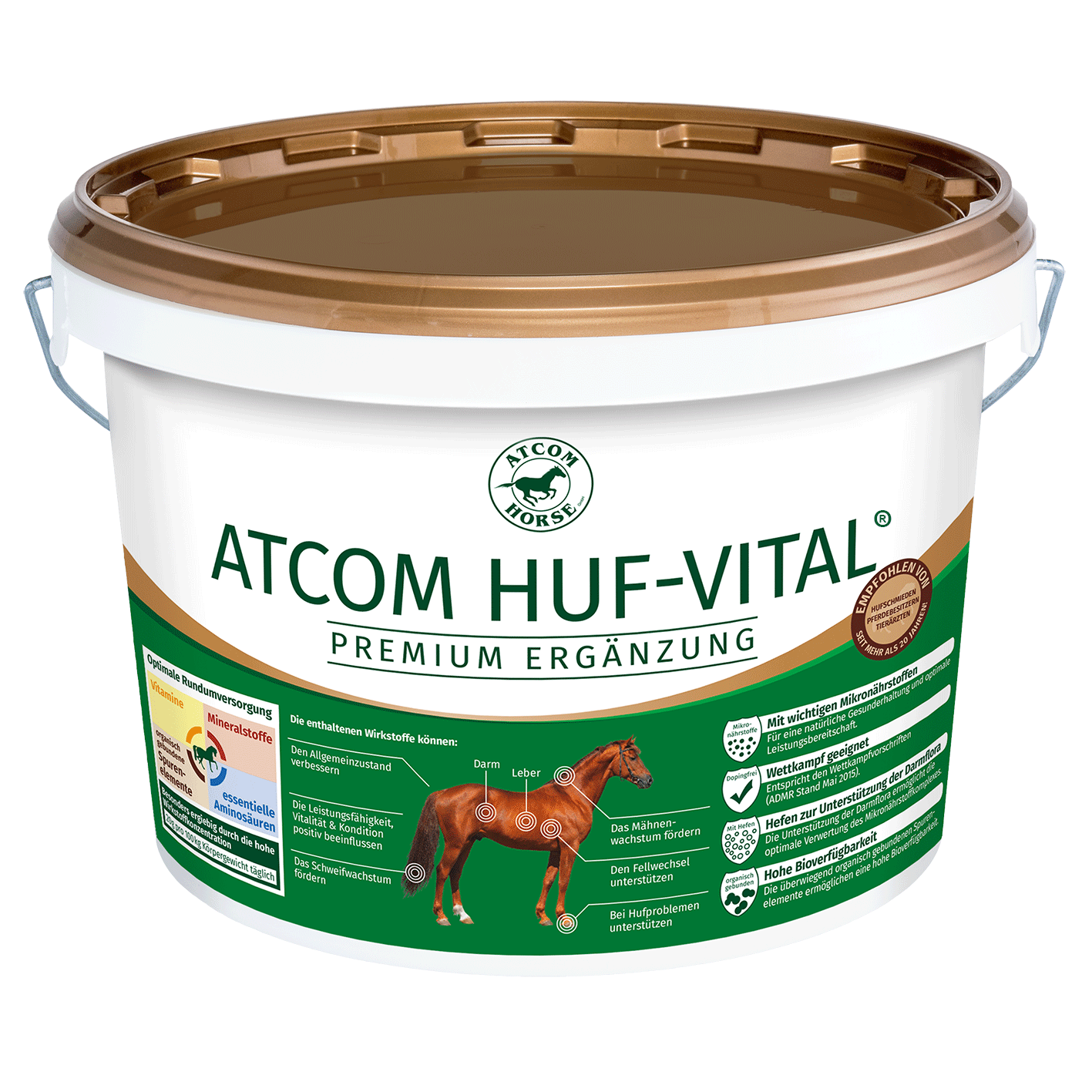
Mineral feed is fed in measured amounts and can be dosed precisely, a lick cannot. The FN generally recommends a freely accessible salt lick for a normally working horse to cover its sodium and chloride requirement. A mineral lick can be a supplement out in the field. However, because it is hardly possible to monitor how much a horse consumes from it, a mineral feed that can be dosed is the better choice for supplying trace elements.
Horses that sweat heavily lose a lot of electrolytes in their sweat. In intensive training or at competitions, electrolytes can therefore be useful. You should be cautious with extra salt in the feed though, as experts warn of side effects with larger quantities. For horses with laminitis, extra salt is considered unsuitable.
How do I know which mineral feed suits my horse?
The right mineral feed depends on the basic forage, because it is supposed to supplement exactly what is missing in the hay. The most reliable way to achieve this is with an analysis of the hay. The Chamber of Agriculture of Vorarlberg describes regular basic forage analyses as absolutely essential for good ration planning. By contrast, table values rarely reflect reality precisely.
Without an analysis, a few criteria help with selection:
- Composition: Pay attention to selenium, zinc and copper and to a sensible ratio of calcium to phosphorus.
- Rest of the ration: Check whether hard feed or muesli already contains minerals.
- Metabolism: For horses with a sensitive metabolism, experts recommend molasses-free products.
- Crude ash: According to a vet quoted in Cavallo, a genuine mineral feed must contain at least 40 percent crude ash.
- Form: According to the FN, whether it is powder, pellets or briquettes is of secondary importance. The main thing is that the horse eats it.
How do I dose mineral feed correctly?
Dose mineral feed according to the manufacturer’s instructions and the bodyweight of your horse. Many manufacturers state the daily amount in grams per 100 kg bodyweight. If you only know your horse’s weight roughly, ask your vet for an estimate at the next check-up. A measuring scoop or kitchen scales helps prevent too much landing in the manger out of habit.
Do not feed highly concentrated single supplements, such as selenium, on spec. Only a targeted blood test can show whether there is a deficiency, because the usual blood panel does not reveal selenium levels. In case of suspected deficiency, pre-existing conditions or metabolic issues such as EMS, your vet is the right person to speak to.
At Ahrens Reitsport you will find various mineral feeds and other feedstuffs. If you are unsure which product suits your hay and your horse, use our feed and care advice in our shop in Tangstedt. You can collect orders over 15 kg from our pick-up station at the shop because we do not ship such parcels.
Personal advice in Tangstedt