How much hard feed is a horse allowed per meal?
The upper limit is about 1 g of starch and sugar per kg of bodyweight and per meal, so for a horse weighing 600 kg this is around 600 g of starch. The German Equestrian Federation (FN) and the Bavarian State Research Center for Agriculture (LfL) give this guideline.
The LfL limits hard feed in total to a maximum of 1 kg per 100 kg of bodyweight per day, oats to 0.3 kg and barley or maize to 0.2 kg per 100 kg of bodyweight and per meal. Divide the daily amount into at least two to three meals and feed hay beforehand. These are maximum values, many leisure horses need significantly less.
By Julia Lühr, Ahrens Reitsport in Tangstedt · Updated
A horse should receive at most about 1 g of starch and sugar per kg of bodyweight per meal. Both the German Equestrian Federation (FN) and the Bavarian State Research Center for Agriculture (LfL) give this rule of thumb in their Gruber Table for horse feeding. For a horse weighing 600 kg this is around 600 g of starch per meal. The following guideline values come from the Gruber Table (9th edition 2024) and apply to healthy adult horses.
What maximum amounts apply to hard feed?
As a rule, hard feed should not make up more than 1 kg per 100 kg of bodyweight per day. Within this daily amount the LfL also limits the individual meals.
| Feed | Maximum amount according to the LfL | Example horse weighing 600 kg |
|---|---|---|
| Hard feed in total | 1 kg per 100 kg of bodyweight per day | 6 kg per day |
| Starch and sugar | 0.1 kg per 100 kg of bodyweight per meal (0.2 kg for hard work) | 600 g per meal |
| Oats | 0.3 kg per 100 kg of bodyweight per meal | 1.8 kg per meal |
| Barley and maize (grains) | 0.2 kg per 100 kg of bodyweight per meal | 1.2 kg per meal |
| Crude fat (for example oil) | 0.1 kg per 100 kg of bodyweight per day, a maximum of 0.5 kg per horse | a maximum of 0.5 kg per day |
| Forage | at least 1.5 kg dry matter per 100 kg of bodyweight per day | at least around 10 kg of hay per day |
For compound feeds such as muesli or pellets it helps to look at the declaration. If the starch and sugar content is given, you can calculate the maximum amount per meal.
Into how many meals should I divide the hard feed?
Divide hard feed into at least two, preferably three meals a day. The FN recommends at least three meals. For large amounts, for example for dressage and show jumping horses at higher levels, eventing or endurance horses, the LfL specifies at least four meals. The smaller each individual portion is, the better the small intestine can digest the starch.
In which order should I feed hay and hard feed?
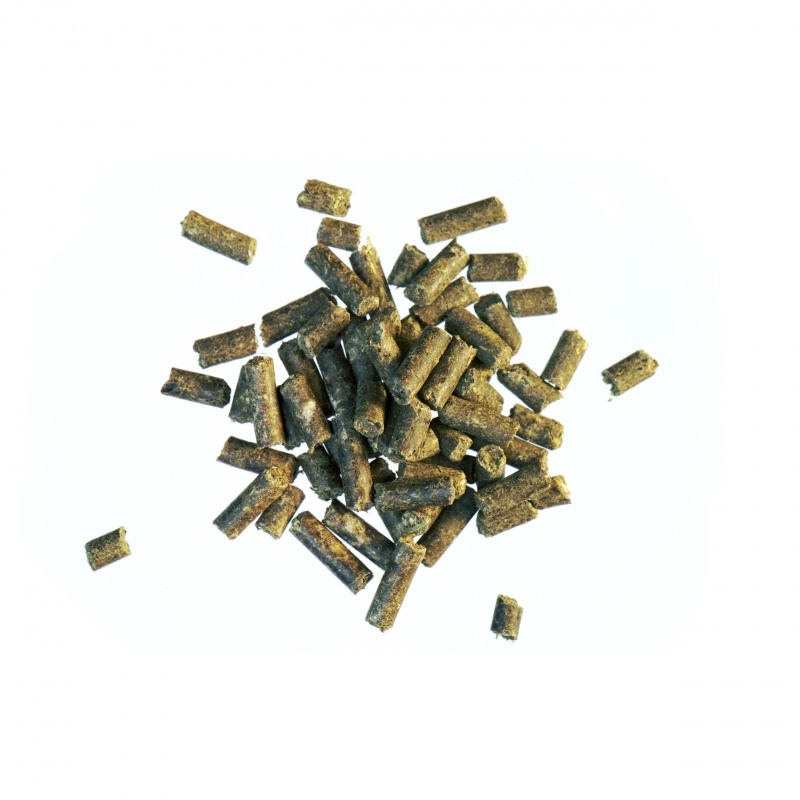
First feed forage, then the hard feed. The LfL states an ideal interval of 20 to 40 minutes between the two feeds. According to the LfL, horses that eat very quickly should not be given pelleted feed, because pellets are eaten more quickly.
What happens if a horse gets too much hard feed?
The small intestine cannot fully digest excessively large amounts of starch and sugar per meal, and the remainder upsets the environment in the large intestine. Feed manufacturer Pavo therefore lists excessively large hard feed portions as a common cause of diarrhoea, and the FN counts colic and gastric ulcers among the consequences of incorrect feeding. If your horse has digestive problems, is overweight or has metabolic disorders, you should therefore discuss the ration with your vet or a feeding adviser.
Do these values apply to every horse?
No, they are upper limits and not a recommendation to feed this much. Many leisure horses need significantly less hard feed or none at all. Separate rules apply for foals, broodmares, old horses and horses with metabolic disorders, which require an individual ration calculation.