Questions about horse feeding
Here we answer frequently asked questions about feeding horses: mineral feed and supplements, linseed oil and linseed, hard feed, muesli and treats. Forage is the basis of every ration, everything else only complements it. The answers are based on specialist sources such as the German Equestrian Federation (FN), the Bavarian State Research Center for Agriculture (LfL) and manufacturers’ recommendations, and do not replace veterinary advice in the case of illness.
By Julia Lühr, Ahrens Reitsport in Tangstedt · Updated
What feed does my horse need every day?
The basis of every horse ration is forage, that is hay, haylage or grass, at a rate of at least 1.5 kg of forage per 100 kg of body weight per day. For a 600 kg Warmblood this can be up to 15 kg hay daily according to the German Equestrian Federation (FN).
The Bavarian State Research Center for Agriculture (LfL) recommends offering forage for at least 12 hours per day, not allowing feeding breaks to last longer than four hours and giving forage before hard feed. In addition, there should be fresh water, a salt lick and usually a mineral feed. Hard feed is only necessary if the hay does not meet the energy requirement.
Does a horse need hard feed at all?
No, not every horse needs hard feed. According to the German Equestrian Federation (FN), a horse at maintenance level or in light work can live on sufficient good hay alone. The Bavarian State Research Center for Agriculture (LfL) also advises only feeding hard feed when it is necessary.
Hard feed makes sense when the energy requirement cannot be met with forage alone. The feed manufacturer Pavo cites as examples sport horses in intensive training, heavily pregnant mares, growing foals and underweight horses. According to Cavallo, poor doers that stay too thin despite good hay may also need hard feed. For overweight horses, on the other hand, it is usually unnecessary.
How much hard feed is a horse allowed per meal?
The upper limit is about 1 g of starch and sugar per kg of bodyweight and per meal, so for a horse weighing 600 kg this is around 600 g of starch. The German Equestrian Federation (FN) and the Bavarian State Research Center for Agriculture (LfL) give this guideline.
The LfL limits hard feed in total to a maximum of 1 kg per 100 kg of bodyweight per day, oats to 0.3 kg and barley or maize to 0.2 kg per 100 kg of bodyweight and per meal. Divide the daily amount into at least two to three meals and feed hay beforehand. These are maximum values, many leisure horses need significantly less.
What is the difference between muesli and pellets for horses?
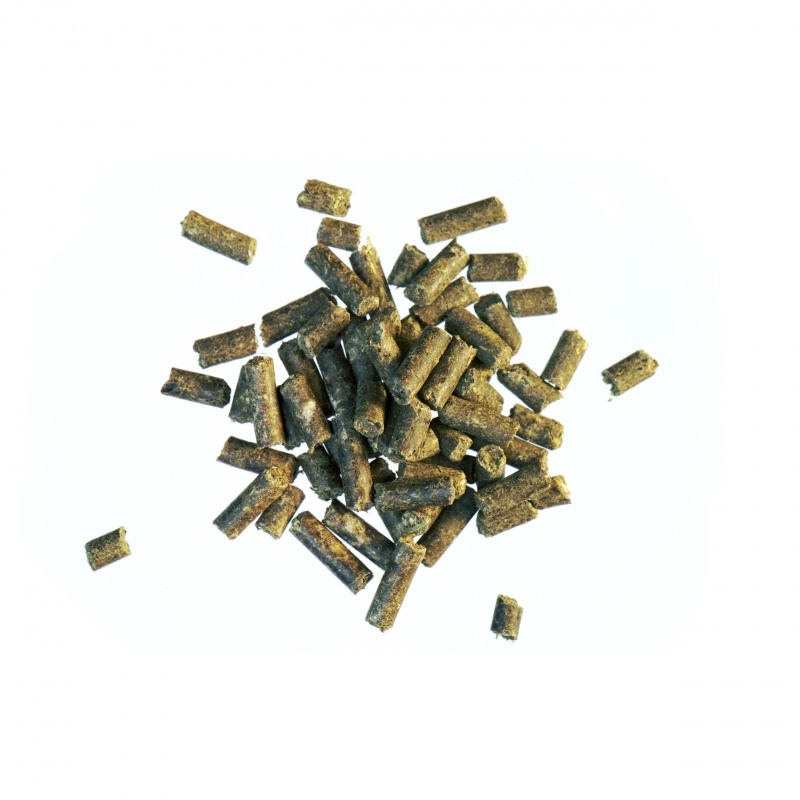
Muesli and pellets are both hard feed and differ mainly in their form, not fundamentally in nutritional value. In muesli, the ingredients such as cereal flakes, alfalfa or herbs remain visible. Pellets are made from ground raw materials that are formed under pressure and heat, explains the manufacturer Pavo.
Pellets are eaten more quickly. The Bavarian State Research Center for Agriculture (LfL) therefore advises against feeding pelleted feed to horses that habitually bolt their feed. Many mueslis contain molasses, in other words sugar. For horses with a sensitive metabolism you should pay attention to the sugar and starch content in the declaration. Introduce any new hard feed gradually by first mixing it in with the old feed.
Sources (3)
When does a horse need mineral feed?
Most horses need mineral feed if they mainly eat hay and do not have good pasture, because hay often contains too few trace elements such as copper, zinc and selenium. The German Equestrian Federation (FN) explicitly recommends mineral feed for horses without adequate pasture.
How large the deficiency is depends on the soil, the time of cutting and the batch of hay. The German Equestrian Federation (FN) advises having hay tested once a year for copper, zinc and selenium. If your horse already gets a mineralised hard feed or muesli, an additional mineral feed may be unnecessary. Check the declaration of all feeds for this.
More in our guide: Mineral feed for horses: useful or unnecessary?
Sources (2)
How much mineral feed does a horse need per day?
For a riding horse, the Bavarian State Research Center for Agriculture (LfL) gives a guideline of 10 g of mineral feed per 100 kg body weight per day, which means about 60 g for a 600 kg horse. According to the LfL, heavily pregnant and lactating mares as well as growing horses need more.
The dosage recommendation on the packaging is always decisive, because mineral feeds vary greatly in concentration. Calculate using your horse’s actual weight and weigh out the amount instead of feeding by eye. If the ration already contains hard feed with added minerals, the required amount is reduced. A ration calculation will give you clarity here.
More in our guide: Mineral feed for horses: useful or unnecessary?
Sources (1)
What happens if a horse gets too much mineral feed?
Too much mineral feed can be harmful because certain trace elements are toxic in high quantities and can also displace other minerals. Selenium is particularly critical: the Bavarian State Research Center for Agriculture (LfL) describes it as rapidly toxic in cases of overdose, causing liver damage and, in extreme cases, the complete loss of the hoof capsule. The German Equestrian Federation (FN) warns that an oversupply of trace elements can even be fatal.
Minerals also inhibit each other. According to the LfL, too much calcium can, for example, reduce the absorption of magnesium. The most common cause is doubling up by feeding both a mineral feed and a mineralised hard feed. If you suspect a mineral imbalance, talk to your vet.
More in our guide: Mineral feed for horses: useful or unnecessary?
Sources (2)
What is mineral feed and what does it contain?
According to EU feed law, mineral feed is a complementary feed with at least 40% crude ash. It therefore mainly supplies minerals and complements the basic feed. On its own it is not sufficient as feed.
Typical components are macro elements such as calcium, phosphorus, magnesium and sodium, trace elements such as copper, zinc, selenium, manganese and iodine, as well as vitamins, especially A, D and E. The Bavarian State Research Center for Agriculture (LfL) gives guideline values per kg mineral feed for riding horses, for example 1,500 mg copper, 700 mg zinc and 16 mg selenium, assuming 10 g per 100 kg body weight. The contents of a product are listed in the declaration under additives and analytical constituents.
More in our guide: Mineral feed for horses: useful or unnecessary?
Sources (2)
What does organic mineral feed mean for horses?
Organic mineral feed contains trace elements that are bound to organic compounds such as amino acids, known as chelates. Inorganic forms on the other hand are simple salts such as oxides, sulphates or carbonates, for example zinc oxide.
Organic compounds are often advertised as being better utilised. However, the animal nutrition expert Prof. Ingrid Vervuert says in the magazine Cavallo that their effect is frequently overrated. More important than the binding form is an amount that matches requirements. For selenium the feed law, according to the Bavarian State Research Center for Agriculture (LfL), even stipulates a separate limit for the organic proportion. If in doubt, have the overall ration calculated.
Sources (2)
From what age do foals receive mineral feed?
Foals usually receive supplementary feed from the 4th to 6th week of life, which also includes a vitaminised mineral feed or a mineralised youngstock feed. This is how the Bavarian State Research Center for Agriculture (LfL) describes it. The exact time depends on the mare’s milk yield and the development of the foal.
After a few weeks, the mare’s milk no longer fully covers the requirement, and copper is rather scarce in milk and grass. For growing horses, the ratio of calcium to phosphorus should be 1.3 to 1 according to the LfL. Suckling foals should not be able to reach a salt lick. Coordinate the feeding of youngstock with your vet.
Sources (2)
Which mineral feed is suitable for older horses?
Older horses need a mineral feed that provides particularly generous amounts of zinc, selenium and vitamins A and E, because their requirement for these increases. The vet Dr Anne Mößeler recommends in Cavallo magazine approximately double the amounts for senior horses compared to younger adult horses.
The feed manufacturer Iwest classes horses from around 15 years of age as older. If a horse can no longer chew hay well, it needs soaked hay cubes as a replacement, and the mineral feed must suit this ration. Have the teeth checked regularly and, in the case of weight loss or illnesses such as Cushing’s, discuss feeding with your vet.
Sources (3)
Which mineral feed is suitable for laminitis, Cushing’s disease or EMS?
For laminitis, Cushing’s disease (PPID) or Equine Metabolic Syndrome (EMS), a mineral feed with as little sugar and starch as possible is suitable, in other words without molasses and cereals. A mineral feed cannot cure the disease, it is only intended to ensure the supply of minerals when the ration is heavily restricted.
A review by Freie Universität Berlin recommends, for EMS, controlled amounts of hay with less than 10% non-structural carbohydrates, supplemented with mineral feed. In Cavallo, a feeding expert advises cereal-free and molasses-free feed for overweight horses. Because diagnosis and ration are closely linked, you should coordinate the feeding with your vet.
Sources (2)
What are supplements for horses and what types are there?
In legal terms supplements are called complementary feed: a compound feed with a high content of certain substances that only results in a complete daily ration when fed together with other feed. This is how it is defined in EU Regulation 767/2009.
This includes mineral feed with at least 40% crude ash, but also products with vitamins, herbs, biotin or electrolytes that are intended to close specific gaps in the ration. The regulation prohibits promising that feed can prevent, treat or cure diseases. A supplement therefore does not replace veterinary treatment. It is useful if a ration calculation or your vet shows a specific need.
Sources (2)
What does linseed oil do for horses?
Linseed oil mainly provides your horse with energy and omega-3 fatty acids. According to the manufacturer St. Hippolyt, cold-pressed linseed oil consists of around 50% omega-3 fatty acids, which they describe as essential fatty acids. According to the Bavarian State Research Center for Agriculture (LfL), 1 g of fat contains roughly twice as much energy as 1 g of starch.
This is why many riders use oil to give poor doers energy without increasing the amount of starch. The LfL attributes a positive effect on skin and coat to linseed feeds, and Pavo mentions a shiny coat, for example during coat change. Linseed oil is not a remedy. If your horse has skin or coat problems, ask your vet to find the cause.
More in our guide: Supporting your horse through the coat change: what really helps
Sources (3)
How much linseed oil can a horse have per day?
Typical amounts are about 5–25 ml of linseed oil per 100 kg body weight per day, so for a 600 kg horse that is around 30 to 150 ml. This is the range given by the manufacturer St. Hippolyt. Pavo states that for a 600 kg horse 40 ml per day is already sufficient as an energy source.
As a permanent upper limit, Pavo gives 200–250 ml per day, the magazine Cavallo 160 ml. The Bavarian State Research Center for Agriculture (LfL) limits the fat content of the entire ration to 0.1 kg per 100 kg body weight. According to Pavo, linseed oil can be fed continuously. Introduce it slowly, spread it over the meals and use up an opened bottle within 6 to 8 weeks.
Which is better for horses, linseed or linseed oil?
That depends on the aim: linseed oil provides concentrated fat and omega-3 fatty acids, linseed also contains mucilaginous substances that, according to the Bavarian State Research Center for Agriculture (LfL), coat the lining of the stomach and intestines with a protective film. This is why the LfL recommends feeding linseed more as a short-term course.
Linseed contains substances that form hydrocyanic acid, brown varieties more so than light ones. The LfL advises heat-treating linseed before feeding, for example boiling it for 5 to 10 minutes or using toasted linseed. For crushed linseed it specifies 10–15 g per 100 kg body weight per day. Linseed oil is easier to dose and does not need to be boiled.
Sources (3)
How many treats is a horse allowed to have per day?
Treats should remain a small reward and not a meal in their own right, because many ready-made treats contain a lot of sugar. Trainers warn about this in the magazine Cavallo. There is no fixed number of pieces, but the amount should fit into the overall ration and the maximum daily allowance of starch and sugar.
As a low-sugar alternative, small portions of hay cubes or carrots are suitable. According to the Bavarian State Research Center for Agriculture (LfL), a horse may eat up to 2 kg of carrots and fruit (excluding stone fruit) per 100 kg body weight per day. Only feed treats for calm behaviour so that your horse does not beg or nip. If your horse is overweight or has EMS or laminitis, discuss rewards with your vet.
Sources (3)
Can you make horse treats yourself and what do you need to watch out for?
Yes, you can easily bake horse treats yourself, for example from rolled oats, grated carrots and apples. The advantage is that you decide how much sugar they contain. The horse magazine ehorses points out that shop-bought treats often contain a lot of added sugar.
Let the treats dry thoroughly after baking so that they do not go mouldy, and only feed treats that are in perfect condition. According to ehorses, stone fruit, avocado, raw potatoes and onions do not belong in them. Honey and syrup increase the sugar content, so you should avoid them for horses with a sensitive metabolism. Home-made treats also count as part of the daily ration.
Sources (3)
Can’t find your question?
Ask us: in our shop in Tangstedt, by phone on +49 4109 252173 or via the contact form. Personal advice is also available under Services.
From our range
Matching products
More topics
- Questions about horse rugs
- Questions about bits and bridles
- Questions about riding helmets
- Questions about body protectors
- Questions about riding boots and half chaps
- Questions about riding clothing
- Questions about brushing boots, bandages and overreach boots
- Questions about saddle accessories
- Questions about grooming and the stable