
Questions about saddle accessories
Here we answer frequently asked questions about saddle pads, half pads, girths, stirrups and spurs. A saddle pad protects the saddle from sweat and dirt and distributes the weight more evenly, but it does not turn an ill-fitting saddle into a well-fitting one. Measurements by the University of Veterinary Medicine Vienna have shown, according to Cavallo, that ordinary saddle pads do not change the fit of a saddle.
By Julia Lühr, Ahrens Reitsport in Tangstedt · Updated
What is a saddle pad?
A saddle pad is a mostly square-cut underlay that lies under the saddle and is visible beneath it. It protects the saddle from sweat and dirt, reduces friction and distributes the weight of saddle and rider more evenly over the back. The saddle cloth serves the same purpose, but follows the shape of the saddle and is hardly visible underneath it.
There are also half pads or saddle cushions, which are used in addition to a saddle pad or saddle cloth, and the padded Western pad that goes under a Western saddle. A special form is the baroque saddle pad with a pointed corner. None of these underlays will permanently compensate for an ill-fitting saddle.
More in our guide: Saddle pad or saddle cloth: differences, shapes and fit
Where does the word Schabracke come from and why is it used as an insult?
According to the Digital Dictionary of the German Language, the word Schabracke goes back to the Turkish çaprak for saddle cloth and probably entered German in the 17th century via the Hungarian csábrák. It originally referred to a decorated cloth that was placed under the saddle or spread over the horse.
The term was later transferred to other uses. In the 18th century it was also used for richly embroidered clothing, and in some dialects for poor-quality women’s clothing. From this came the casual, derogatory meaning for an old horse, an old woman or a worn-out object. If you call someone an alte Schabracke (old Schabracke), you are drawing on this figurative meaning. In the stable the word simply means the pad that goes under the saddle.
More in our guide: Saddle pad or saddle cloth: differences, shapes and fit
Sources (1)
What do the size codes DR, VS or SR on saddle pads mean?
The abbreviations show which type of saddle the pad is suitable for: D or DR stands for dressage, VS, VSS or VSD for eventing and SS or SR for show jumping. Dressage saddle pads are cut to fit the longer flaps of a dressage saddle, show jumping saddle pads are shorter and more rounded at the front.
In addition there is a size for the build of the horse, for example P or Pony, Cob for finer horses, WB or Full for Warmbloods and KB for Draught horses. Because many manufacturers use their own size systems, it is worth checking the respective size chart. The crucial point is that the pad lies under the whole saddle and is not so large that it forms creases.
More in our guide: Saddle pad or saddle cloth: differences, shapes and fit
Sources (2)
How often should I wash the saddle pad?
There is no fixed rule. Wash the saddle pad as soon as it is sweaty or encrusted, and let it dry completely after every ride. This is also important for hygiene. According to DocCheck Flexikon, skin fungi are transmitted not only directly, but also via brushes and saddle cloths. In the event of a fungal infection, the University of Veterinary Medicine Hannover recommends disinfecting the surroundings as well.
It is practical to use two or three pads in rotation and to give each horse its own. Many saddle pads tolerate 30 °C on a gentle cycle with a mild detergent, but the care label is decisive. Sheepskin requires a special detergent in order to preserve its properties.
More in our guide: Saddle pad or saddle cloth: differences, shapes and fit
Why does my saddle pad slip backwards?
Most of the time the saddle pad slips because it is not attached to the saddle or has not been pulled up into the gullet. Use any loops for the girth and girth straps as well as hook-and-loop fastenings so that the pad stays connected to the saddle. After placing it on the horse, pull the saddle pad up into the gullet at the front. According to a Swiss saddlery, this “channelling” also prevents seams from pressing on the back.
The same saddlery recommends first placing saddle and pad a little too far forward and then sliding them back into the correct saddle position in the direction of coat growth. If the whole saddle slips backwards, a saddler should check the fit and girth position. For very athletic horses there are also specially shaped, curved girths.
More in our guide: Saddle pad or saddle cloth: differences, shapes and fit
Sources (2)
What is a half pad good for and does it make sense to use one?
A half pad can cushion pressure points under the saddle but it is no substitute for a well-fitting saddle. It is placed on top of the saddle pad, is shorter at the sides and is intended to absorb shocks or temporarily compensate for muscular asymmetries. In a test carried out by the magazine Cavallo, all the half pads tested, whether made from gel, foam or sheepskin, reduced the measured pressure peaks and the differences between the models were small.
However, thick pads can narrow the gullet at the withers and therefore make the fit worse. Saddle fitters therefore recommend using pads that are as thin as possible and that lie flat over a large area. The best way to find out whether your horse needs a pad, for example after muscle loss or during training, is to discuss it with your saddle fitter.
More in our guide: Saddle pad or saddle cloth: differences, shapes and fit
Sources (2)
Why do you put sheepskin under the saddle?
Sheepskin is placed under the saddle because it is soft, cushions impacts and, as a natural material, is breathable and has a temperature-regulating effect. In a test by the magazine Cavallo a sheepskin half pad reduced peak pressure, but distributed the pressure over a smaller area than the saddle with a normal saddle cloth. The test rider therefore saw it more as a solution for sensitive horses or horses with little back musculature.
Sheepskin needs care: it should be brushed regularly, allowed to dry well after riding and washed with a special detergent. According to a saddle expert in the magazine Pferderevue, matted fleece creates additional pressure. Pads that have no fleece in the middle are a good option because they are easier to pull up into the gullet of the saddle.
More in our guide: Saddle pad or saddle cloth: differences, shapes and fit
Sources (3)
Is riding with a riding pad or with a saddle better for the horse’s back?
For regular and longer rides a properly fitting saddle is the better choice, because a riding pad has no tree to distribute the rider’s weight. In its information sheet on the bareback pad, one saddlery gives a limit of around 20 minutes at most on a well-trained horse. It also warns that many pads do not put the rider in a favourable seat position. At competitions under the German competition rules (LPO) a saddle with a tree is compulsory.
For short sessions or for improving your seat a pad can be a useful addition. A thin cloth underneath keeps the pad clean. It is important that it lies without wrinkles and that the spine remains free. If your horse shows back problems a vet should clarify the cause.
More in our guide: Saddle pad or saddle cloth: differences, shapes and fit
When should you start riding with spurs and what are they for?
You should only ride with spurs once you have a balanced seat and a quiet lower leg, because spurs do not replace the driving leg. They are intended to refine the aids in further training through targeted, brief impulses and not to keep the horse going permanently. Sprenger also advises initially riding young horses without spurs until they understand the aid from the flat leg.
For beginners the manufacturer recommends starting with rounded spurs or ball spurs with a short shank. For sensitive horses, during coat change or on clipped coats, soft models with a broad wheel are suitable. If used incorrectly, spurs make the horse dull and can injure it in the worst case.
Sources (1)
Which spurs are permitted at competitions?
At competitions under the German competition rules (LPO), spurs made of metal or plastic with a total length of no more than 4.0 cm are permitted, measured from the boot. The shank must be horizontal or angled downwards, and the ends must not cause injuries in normal use. Rowels are permitted, but points are not.
The FN equipment rules show, among other things, spurs with a ball end, spurs with a shank, swan neck spurs, hammer spurs and various spurs with rowels as permitted examples. A rowel with rounded points is not one of them. The current version of the rules and the schedule of the respective class are always decisive.
When and how should I tighten the girth properly?
Tighten the girth in several stages rather than all at once. First you only put it on loosely and tighten it slightly. A Swiss saddlery recommends tightening it for the first time before you leave the grooming area, and tightening it again after a few steps. You only tighten it firmly after mounting, from the saddle, once the horse has walked a few steps.
Tightening the girth too quickly and with jerky movements is uncomfortable and can encourage girthiness. Before you get on, gently bring the horse’s front legs forwards so that no skin folds form under the girth. The girth should lie roughly a hand’s breadth behind the elbow. If you can only fasten it on the first hole with a lot of force, it is probably too short.
Sources (1)
What girth length do I need?
You can determine the correct girth length on the tacked-up horse with the girth tightened evenly. For a short girth you measure, according to the manufacturer Mattes, from the lower edge of one saddle flap to the lower edge of the other saddle flap, subtract 30 cm and then round up to the next available length. For a long girth you measure, after tightening, from the second hole of the girth straps, counting from the bottom, on one side to the second hole on the other side.
It is important that the buckles sit clearly above the elbow’s range of motion. Girths are measured from buckle to buckle. If a short girth is too short, the girth straps lie further down along the ribcage and create more localised pressure.
Which material is well suited for a girth?
A good choice is a sturdy, well padded girth that keeps its shape, with soft leather and high quality cord girths having proved particularly successful. According to experts in the Pferderevue, leather is durable and keeps its shape, but requires a lot of care. A physiotherapist reports that cord girths distribute the pressure very evenly. Neoprene is inexpensive and washable, but can encourage heavy sweating and is only suitable for straight-cut girths.
Experts interviewed advise caution with elastic inserts. Elastic on one side only creates uneven tension, and worn-out inserts can tempt you to over-tighten the girth. Permanently attached sheepskin can distribute the pressure, but is difficult to clean and clumps easily.
Sources (1)
What do I need to look out for with stirrups and stirrup leathers?
The stirrup must be wide enough that your foot can enter and leave it quickly. This is how the FN equipment rules quote the guidelines for riding and driving. The stirrup leathers must hang freely from the safety bar of the saddle so that the safety bar can open.
At competitions, stirrup leathers may also run under the saddle flap, as long as the safety bar can open and the leather remains movable. According to the German Equestrian Federation (FN), riding boots must not be fastened to the saddle or the stirrup. Check leathers and stirrups regularly for cracks and wear, because they carry your full weight every time you mount.
When was the stirrup invented and when did it come to Europe?
The oldest known iron stirrup comes from a grave in Mongolia and is dated to between 243 and 405 AD, as Spektrum der Wissenschaft reports on a study in the journal Antiquity. The researchers assume that solid saddles with stirrups originated in the 4th or 5th century and became widespread in East Asia from the 6th century onwards.
The stirrup reached Central Europe from the 6th century onwards via the Balkans with the Avars, a horse-riding people, as described in an object description on museum-digital Westfalen. In the beginning, stirrups were made of ropes and leather, later iron models became established. Together with the saddle they gave the rider significantly more security in the seat.
Sources (2)
Can’t find your question?
Ask us: in our shop in Tangstedt, by phone on +49 4109 252173 or via the contact form. Personal advice is also available under Services.
From our range
Matching products
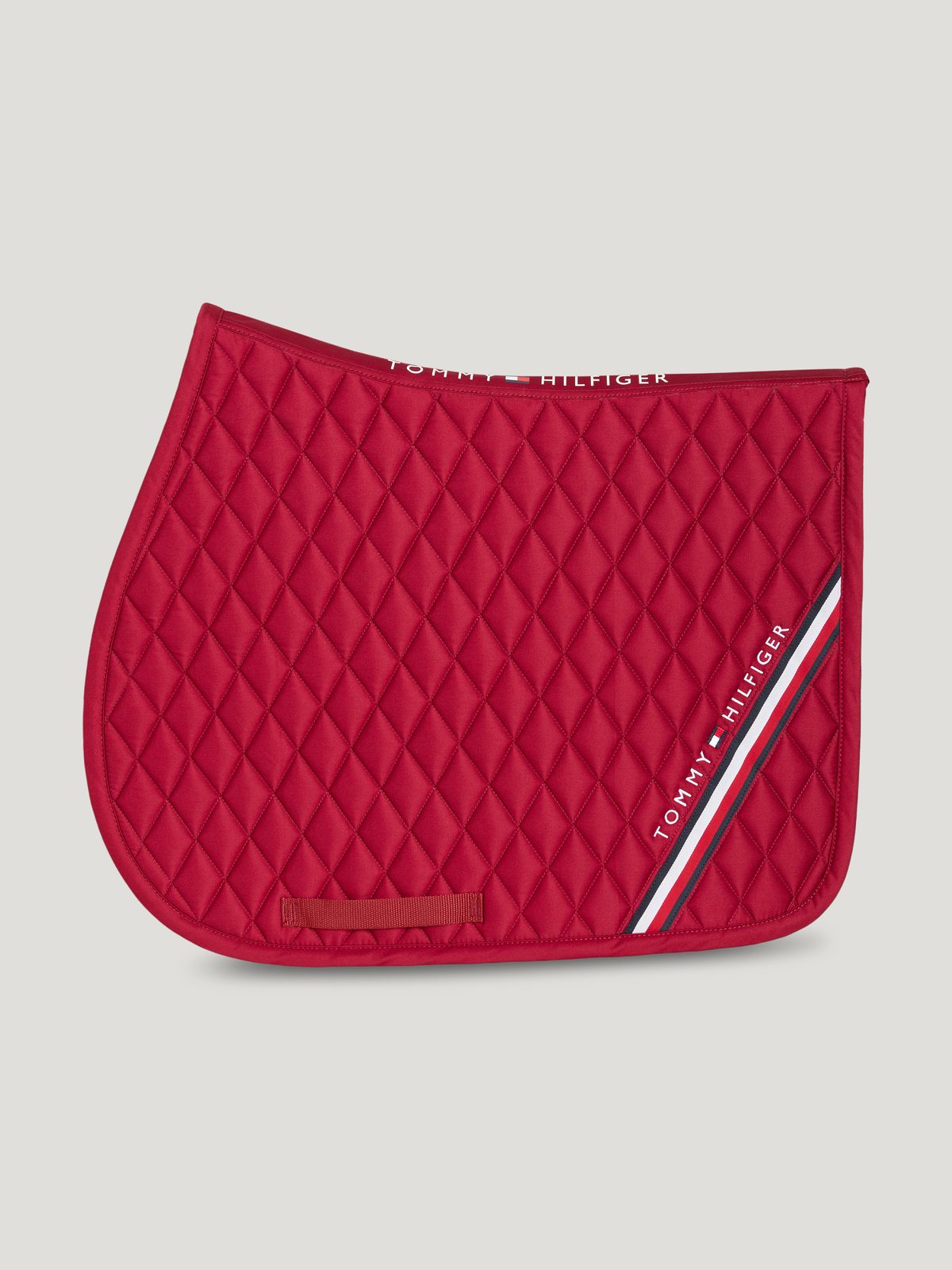
Tommy Hilfiger Equestrian
Tommy Hilfiger Equestrian Stanford Saddle Pad
incl. 19% VAT, plus shipping
In stock now · delivery in 3–5 days
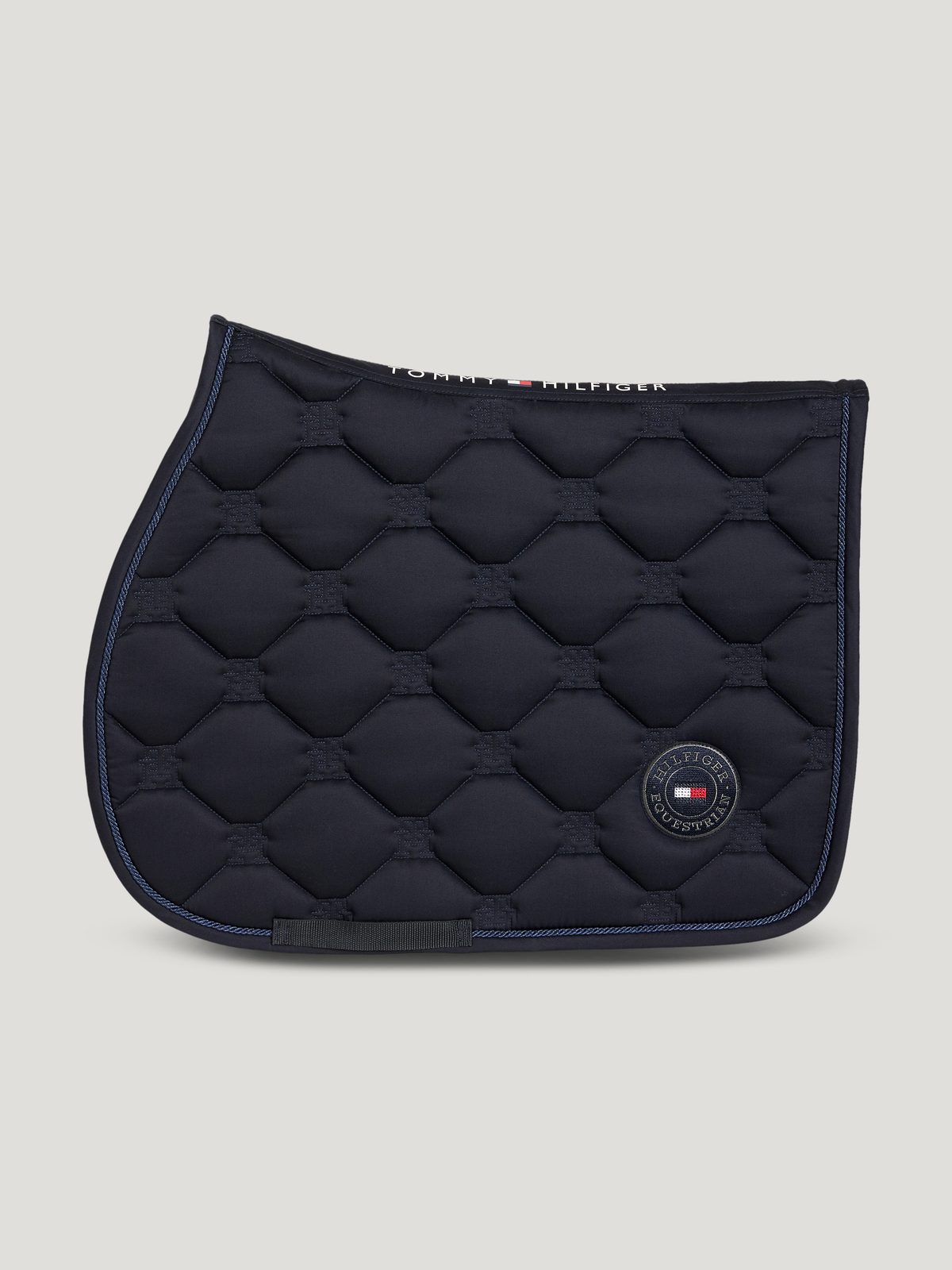
Tommy Hilfiger Equestrian
Tommy Hilfiger Liberty Saddle Pad
incl. 19% VAT, plus shipping
In stock now · delivery in 3–5 days
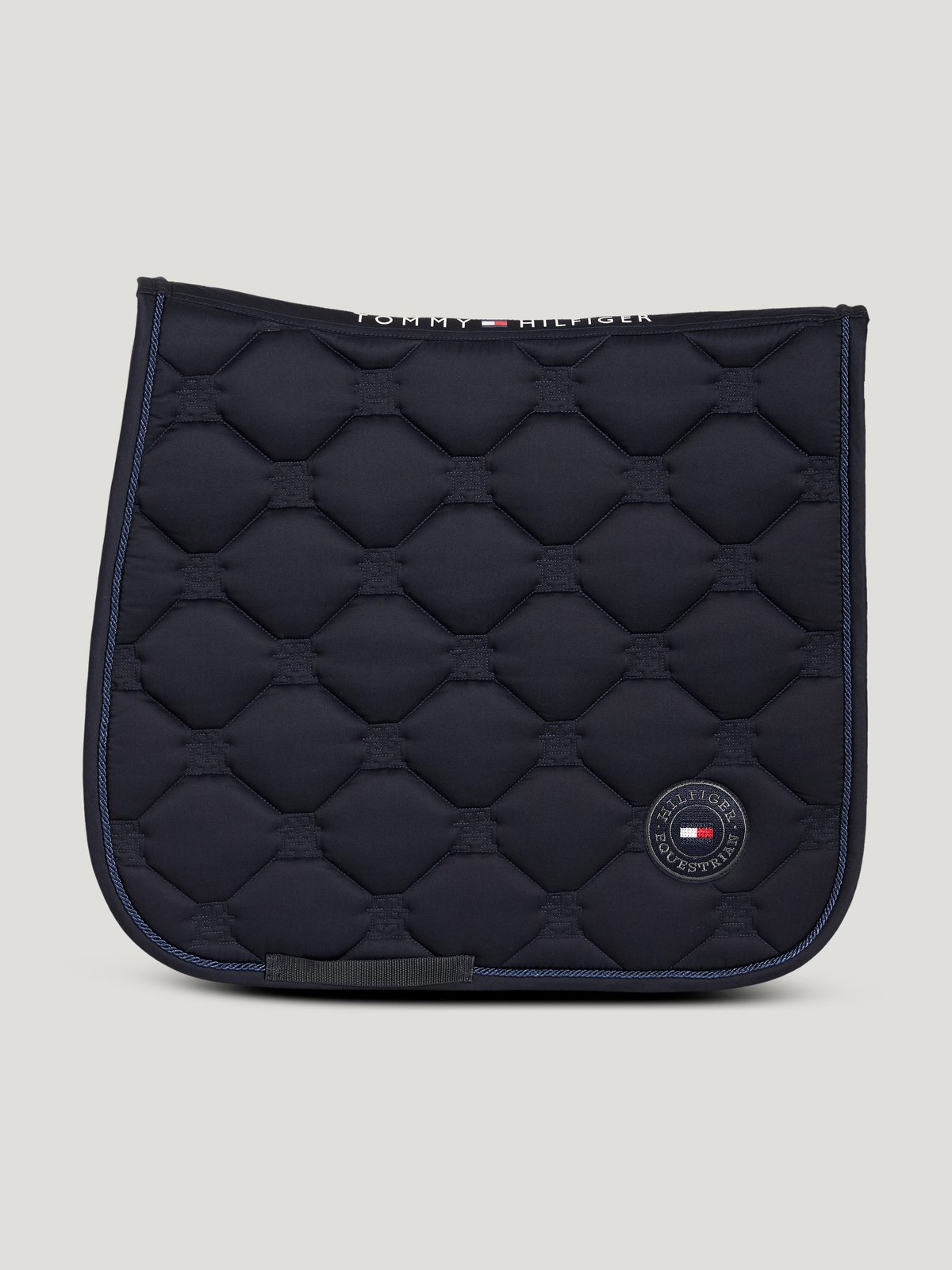
Tommy Hilfiger Equestrian
Tommy Hilfiger Liberty Saddle Pad Dressage
incl. 19% VAT, plus shipping
In stock now · delivery in 3–5 days
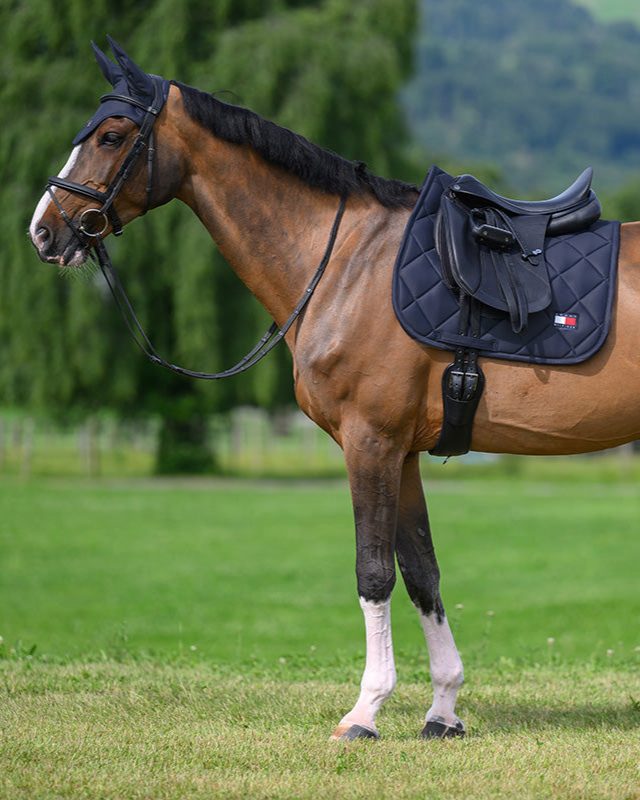
Tommy Hilfiger Equestrian
Tommy Hilfiger Equestrian Saddle Pad Columbia
incl. 19% VAT, plus shipping
In stock now · delivery in 3–5 days
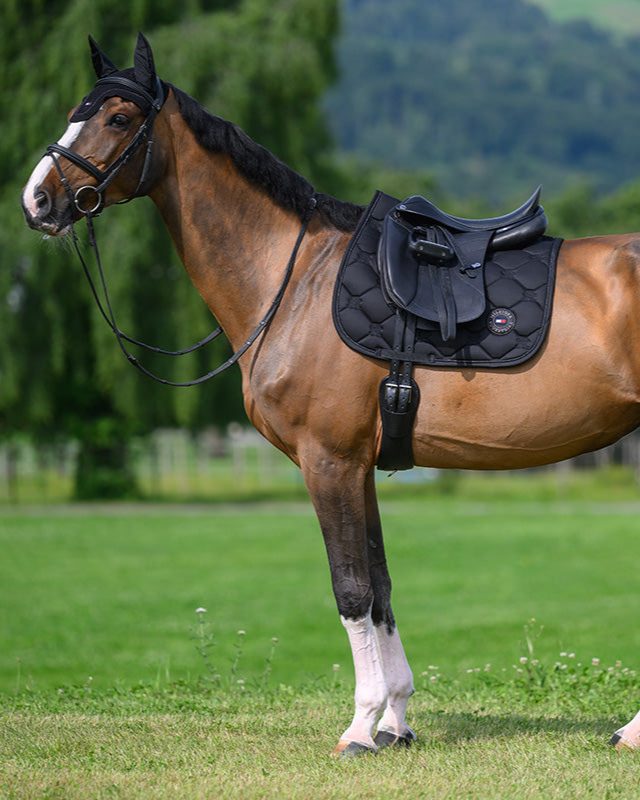
Tommy Hilfiger Equestrian
Tommy Hilfiger Equestrian Saddle Pad Emory
incl. 19% VAT, plus shipping
In stock now · delivery in 3–5 days
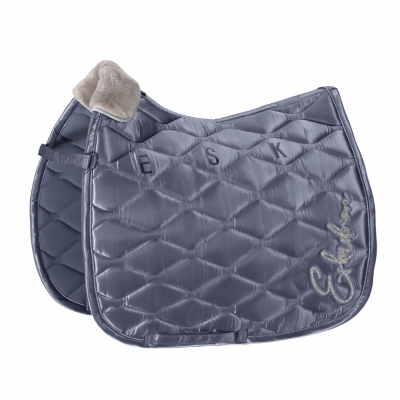
Eskadron
Saddle Pad Satin Essence AW22 Eskadron
incl. 19% VAT, plus shipping
In stock now · delivery in 3–5 days
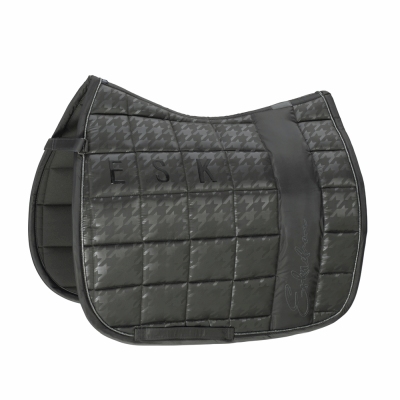
Eskadron
Saddle Pad Big Square Glossy Essence AW22
incl. 19% VAT, plus shipping
In stock now · delivery in 3–5 days
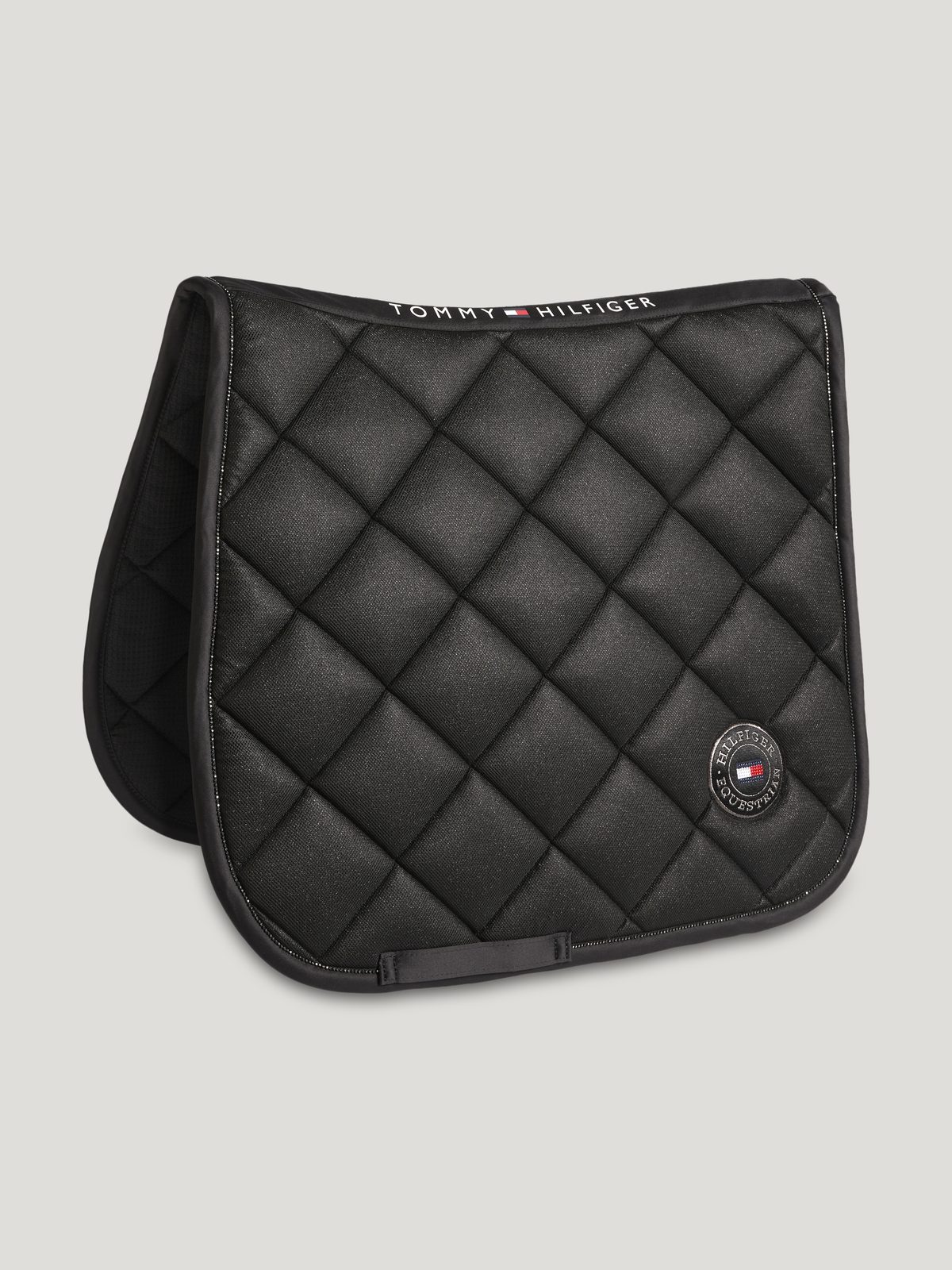
Tommy Hilfiger Equestrian
Parsons Dressage Saddlepad BLACK
incl. 19% VAT, plus shipping
In stock now · delivery in 3–5 days
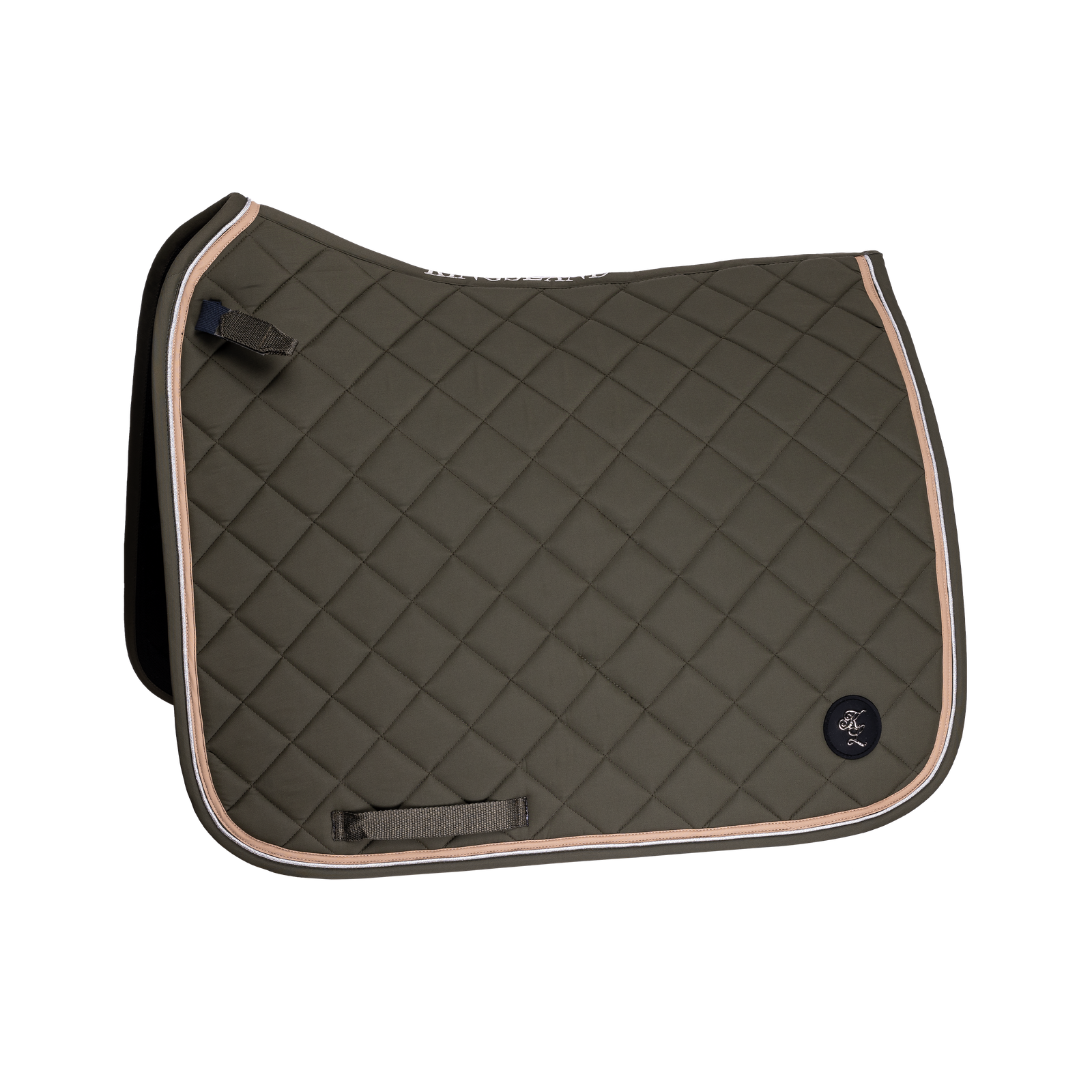
Kingsland
Kingsland KLella Saddle Pad
incl. 19% VAT, plus shipping
In stock now · delivery in 3–5 days
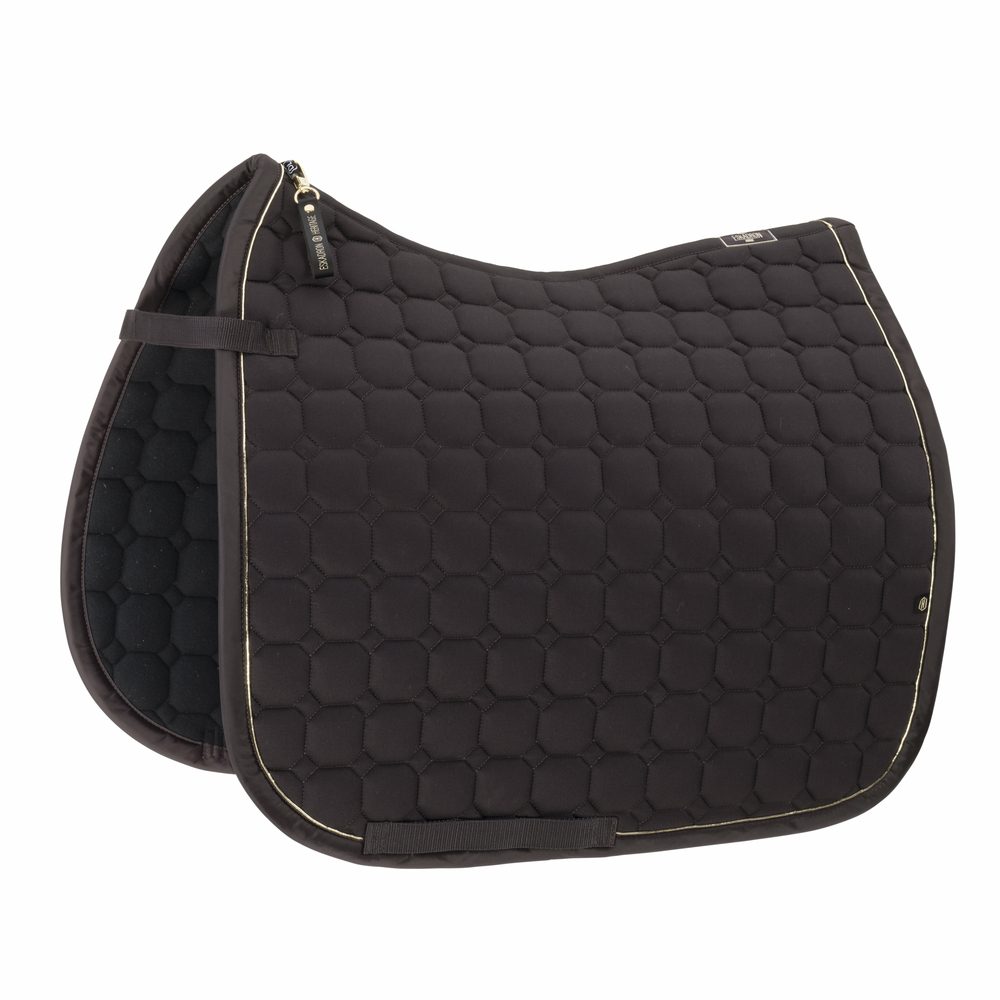
Eskadron
Eskadron Saddle Pad Cotton Heritage 25/26
incl. 19% VAT, plus shipping
In stock now · delivery in 3–5 days
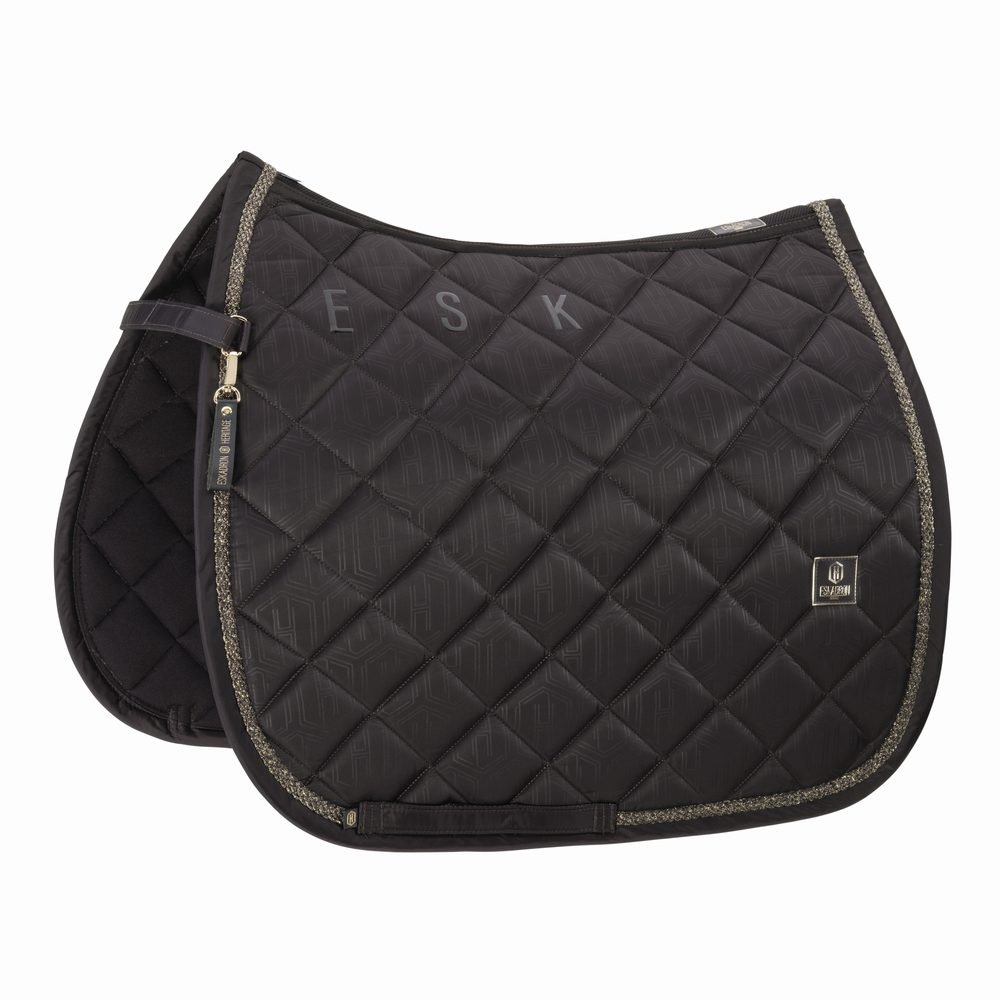
Eskadron
Eskadron Saddle Pad Glossy Heritage 25/26
incl. 19% VAT, plus shipping
In stock now · delivery in 3–5 days
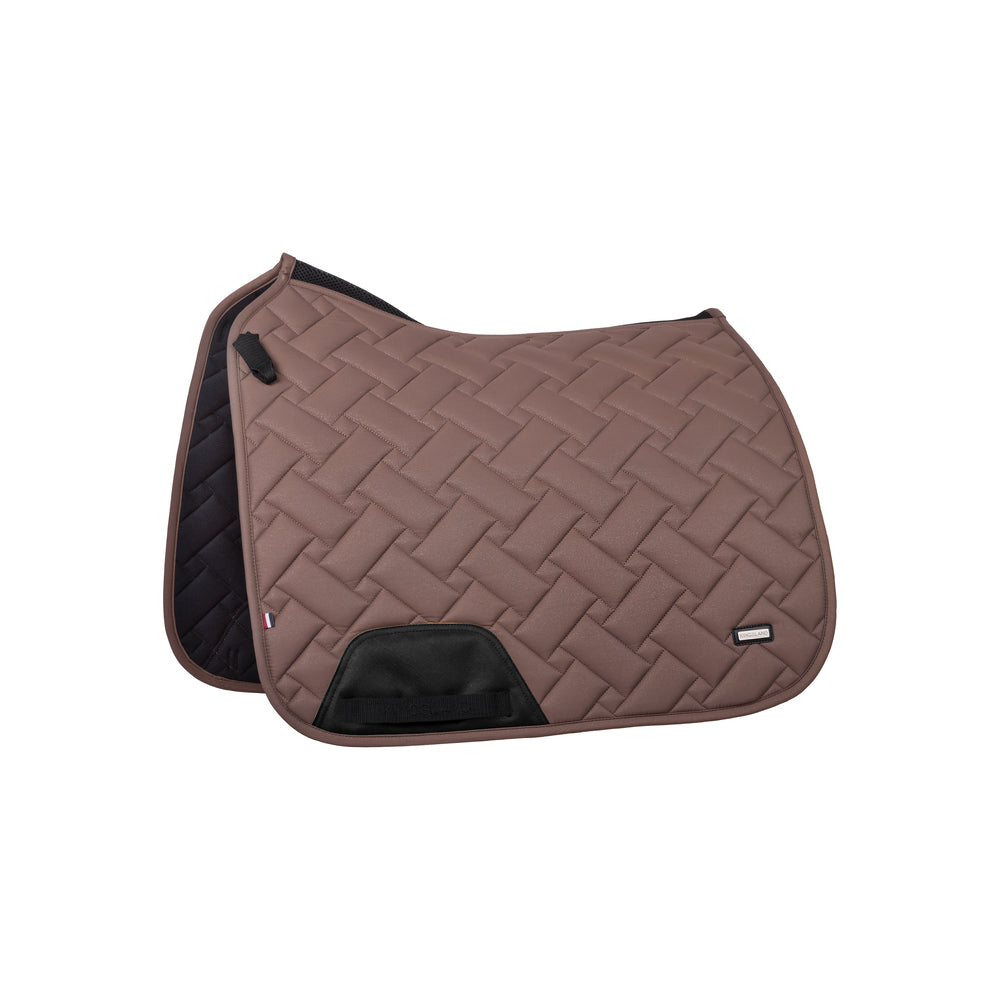
Kingsland
Kingsland KLLexie Dressage Saddle Pad
incl. 19% VAT, plus shipping
In stock now · delivery in 3–5 days
All 83 products
take a look
More topics
- Questions about horse rugs
- Questions about bits and bridles
- Questions about riding helmets
- Questions about body protectors
- Questions about riding boots and half chaps
- Questions about riding clothing
- Questions about brushing boots, bandages and overreach boots
- Questions about horse feeding
- Questions about grooming and the stable