
Questions about body protectors
Here we answer the most common questions about body protectors for riding: protection levels, standards, fit, sizes for children, air vests and the rules at competitions. A body protector protects your back and ribcage in the event of a fall and is compulsory for jumping over solid obstacles. A protector certified to EN 13158, level 3 is recommended.
By Julia Lühr, Ahrens Reitsport in Tangstedt · Updated
What are the benefits of a body protector when riding?
A body protector absorbs part of the impact energy in a fall, a kick or if a horse steps on you and therefore protects your back and ribcage. A well fitting body protector mainly helps to prevent bruising and other soft tissue injuries.
According to the British testing standard BETA, a level 3 body protector is intended to prevent minor injuries such as painful bruising and to avoid some rib fractures. No body protector can be guaranteed to protect against serious injuries, and BETA and manufacturers expressly point this out.
Sources (2)
Is a body protector useful for normal riding?
When jumping solid fences across country a body protector is a good idea and is compulsory at competitions, for normal riding lessons it is not necessary. This is how the German Equestrian Federation (FN) describes it in its guide for parents.
For beginner riders, a poorly fitting body protector can even hinder learning a correct seat. The Social Insurance for Agriculture, Forestry and Horticulture (SVLFG) lists starting young horses, as well as particularly high-risk disciplines, as typical situations where additional protection is appropriate. Decide according to your own level of risk and ask for advice from a specialist retailer.
What does Level 3 mean for body protectors?
Level 3 is the highest protection level according to the European standard EN 13158 and the British BETA standard and is considered suitable for normal riding, competitions and work with horses. The German Equestrian Federation (FN) recommends a body protector to EN 13158, Level 3 for cross-country jumping.
Level 2 is intended only for low-risk situations, so not for jumping, hacking on the road, young or excitable horses or inexperienced riders. Level 1 offers the least protection and is intended only for licensed jockeys in racing. You can recognise the level by the coloured BETA label.
Which is better: body protector or back protector?
For riding, a body protector usually offers more protection than a back protector, because in addition to the back it also covers the ribcage. A back protector protects the back only.
The standards are also different: body protectors are tested according to the riding standard EN 13158, back protectors mostly according to the standard for motorcycle protective clothing EN 1621-2. For cross-country jumping, the German Equestrian Federation (FN) explicitly recommends a body protector certified to EN 13158, level 3.
How should a body protector fit for riding?
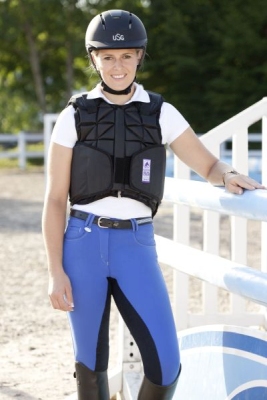
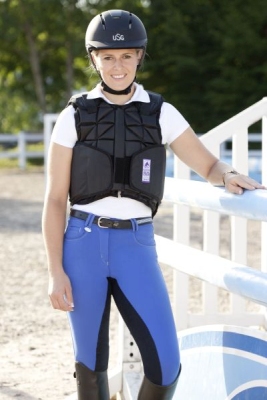
A body protector fits correctly when it sits close to your upper body, does not knock against the cantle at the back and does not stick up into your neck at the top. You must still be able to move freely, and the German Equestrian Federation (FN) recommends a forward roll on the ground as a test.
At the front, the body protector should reach to the breastbone and cover the lower ribs, but not the navel. In the saddle there should be about a hand’s width of space between the saddle and the bottom edge of the body protector. You must be able to take a deep breath without feeling restricted.
How do I find the right size for a body protector?
You can determine the correct body protector size using chest, waist and back length measurements, taken over light clothing with a soft tape measure. The chest measurement determines the size group, the waist measurement ensures that the body protector does not slip.
Measure the back length from the prominent vertebra at the base of the neck down to the lower end of the spine. Many body protectors are therefore available in several back lengths. When trying it on, you should be able to close all hook-and-loop fasteners so that the body protector fits firmly but comfortably. The safest option is to try it on with advice in a specialist shop.
Sources (1)
Which body protector is suitable for children?
A suitable choice for children is a body protector certified to EN 13158 Level 3 that fits your child’s chest, waist and back length exactly. According to the German Equestrian Federation (FN), it becomes necessary as soon as your child is jumping solid fences in cross-country.
For starting out in riding lessons, a child does not need a body protector. One that is too big or does not fit well can even make it harder to learn a correct seat. Some riding schools lend body protectors in several sizes.
When is a body protector compulsory when riding?
At competitions, the German competition rules (LPO) require a body protector for jumping fixed obstacles, in other words especially in cross-country and eventing. In cross-country tests, riding without the required body protector leads to elimination under § 646 LPO.
The German Equestrian Federation (FN) recommends a body protector certified to EN 13158, Level 3 for cross-country jumping. It is also advisable for cross-country jumps in leisure riding. Driving has its own rules. The version of the LPO and the schedule that is currently in force is always decisive.
Does an air vest replace the body protector?
No, an air vest complements the body protector, but does not replace it. In eventing a traditional body protector must still be worn under the air vest, as described by the German Equestrian Federation (FN).
One reason for this: if rider and horse fall together, the airbag may not deploy, as explained by the Social Insurance for Agriculture, Forestry and Horticulture (SVLFG). Air vests are also not manufactured according to the riding standard EN 13158, but in line with the standard for motorcycle protective clothing EN 1621-4. For the cross-country phase of driving competitions, the German competition rules (LPO) also make it clear that an air vest alone is not sufficient.
How does an air vest work when riding?
An air vest is connected to the saddle by a strap and inflates as soon as the rider falls out of the saddle. The strap comes under tension and activates a gas cartridge, which fills an air cushion in the vest. In contrast to normal body protectors, most air vests have neck padding that is intended to prevent the head from being overstretched.
We do not recommend the vest for starting young horses, because it makes a loud noise when it inflates, which could frighten young horses.
Sources (2)
How long does a body protector last and when do I need to replace it?
Manufacturers state that body protectors, if stored correctly, have an average lifespan of around five years. The British specialist magazine Horse & Hound recommends replacing them after three to five years.
Check your body protector regularly for visible damage, especially after a fall. According to the SVLFG, individual protector parts may then need to be replaced if necessary. If you are unsure, it is helpful to look at the instructions or have it checked in a specialist shop.
Sources (2)
Is my old body protector with a purple label still approved?
A body protector with a purple label corresponds to the older BETA standard from 2009, which has not been produced since 2018. Since 1 January 2024, major British equestrian federations have only accepted body protectors certified to the 2018 BETA Level 3 standard with a blue label.
In Germany, the German competition rules (LPO) require a body protector when riding over solid fences, and the German Equestrian Federation (FN) recommends EN 13158, Level 3 for this purpose. Since a 2009 body protector is now also beyond the recommended service life due to its age, it is in any case sensible to replace it.
Why does a new body protector feel so stiff?
A new body protector initially feels stiff because the foam material only adapts to your shape through your body heat. According to the German Equestrian Federation (FN), this is largely complete after around ten minutes of wear.
So put the body protector on while you are grooming or tacking up. Wear it as close to the body as possible, that is over a T-shirt and under a jumper or jacket. A new body protector moulds itself to your body as you wear it.
Can’t find your question?
Ask us: in our shop in Tangstedt, by phone on +49 4109 252173 or via the contact form. Personal advice is also available under Services.
From our range
Matching products
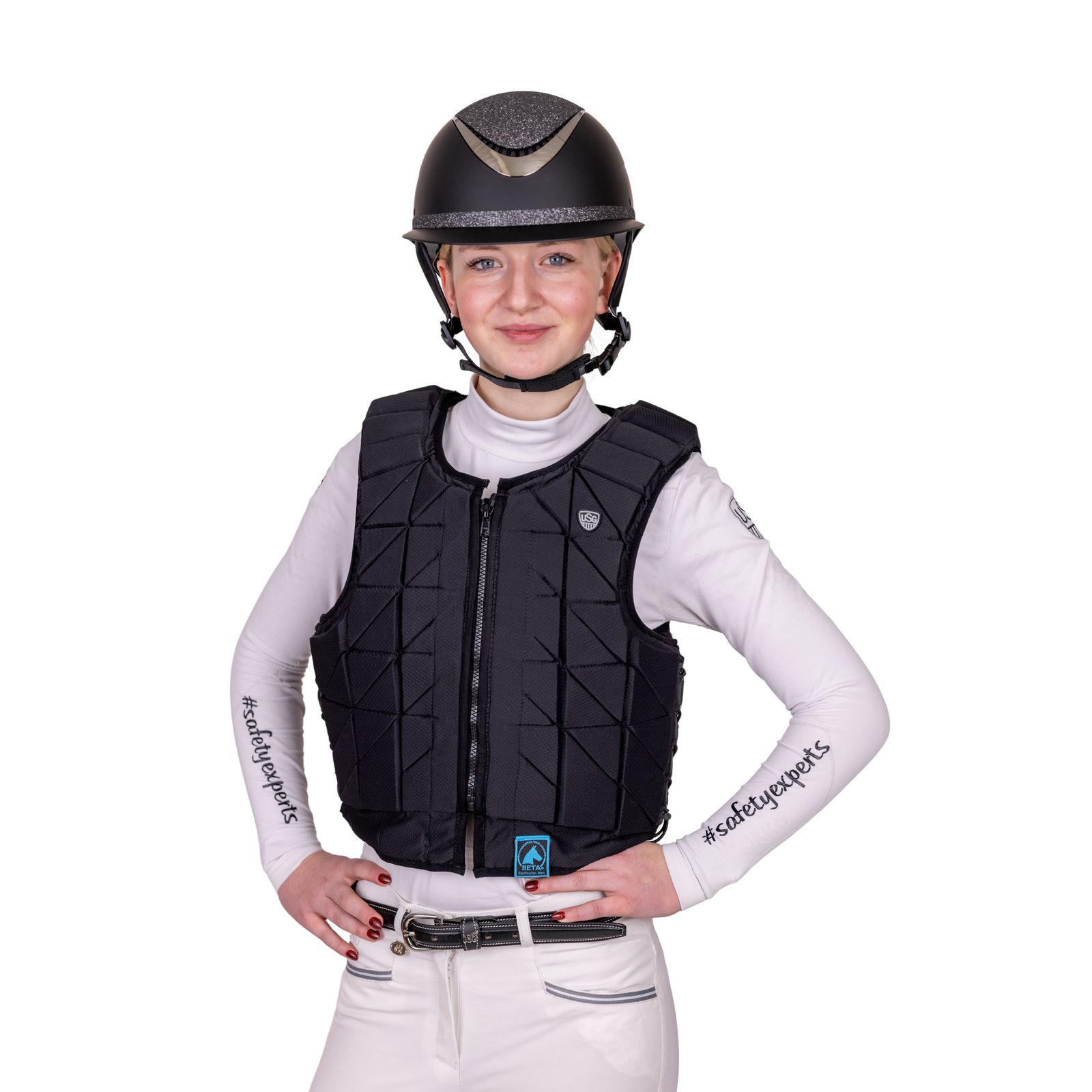
USG
USG Panel Body Protector Flexi Adult
incl. 19% VAT, plus shipping
In stock now · delivery in 3–5 days
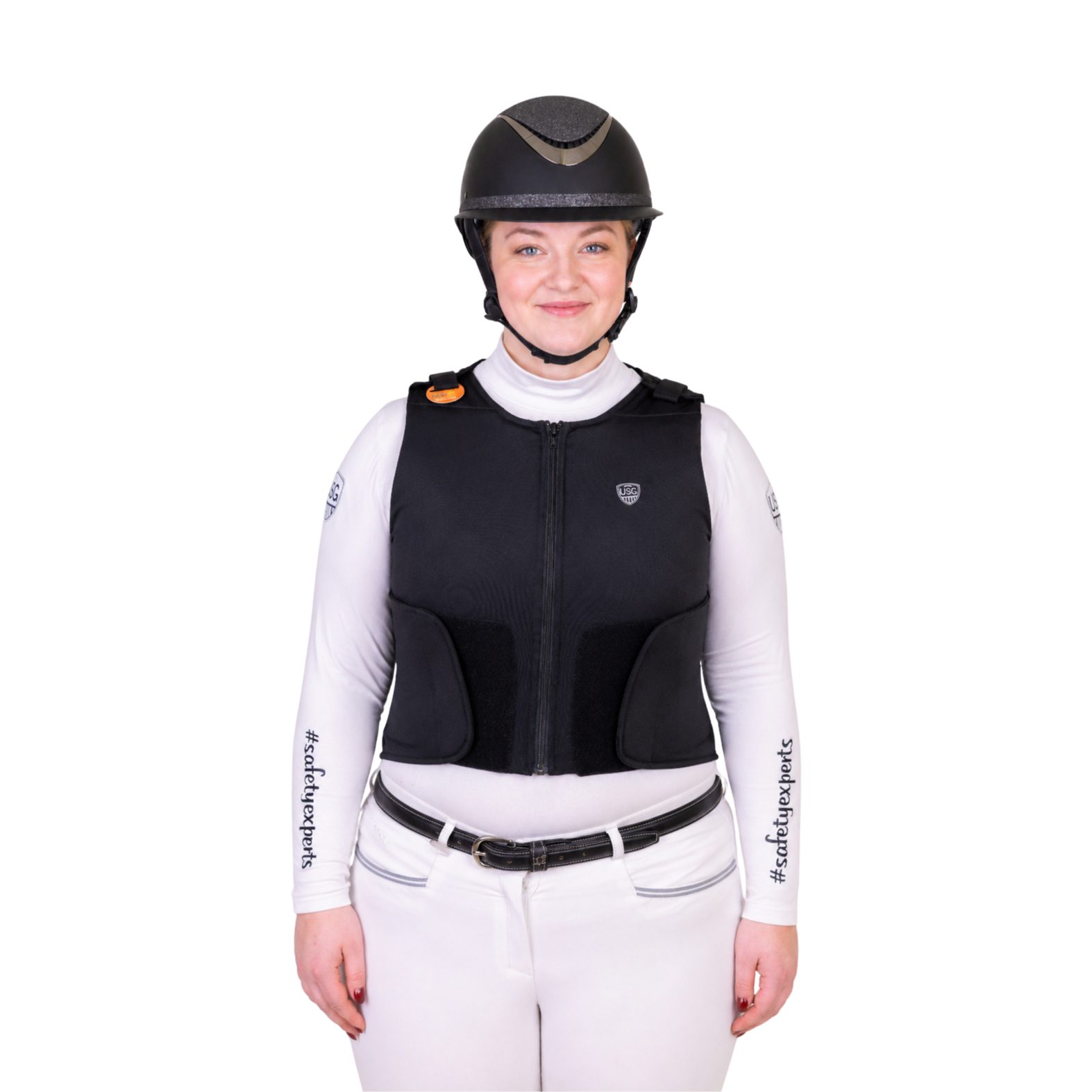
USG
USG Back Protector Precto Dynamic Fit Happy Size
incl. 19% VAT, plus shipping
In stock now · delivery in 3–5 days
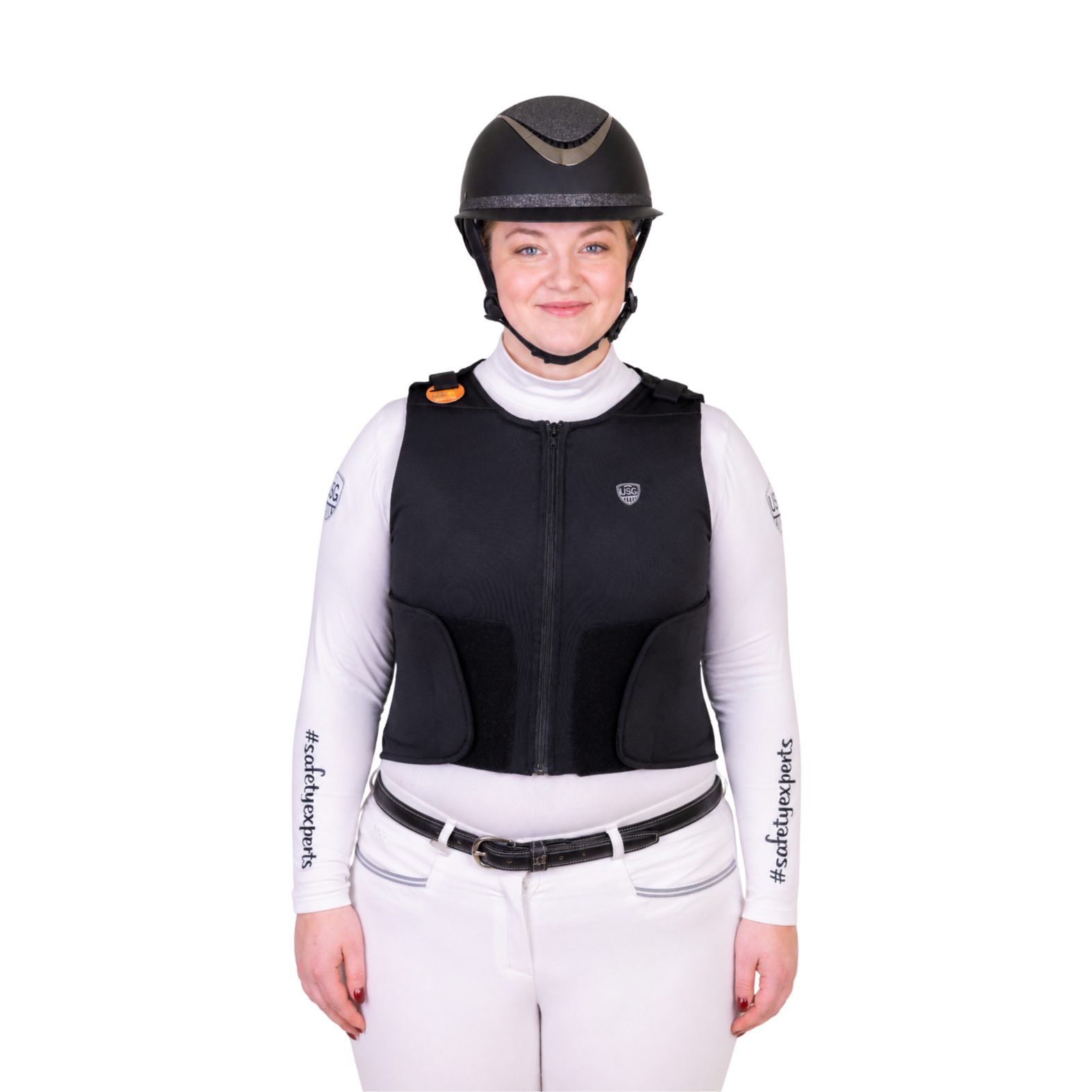
USG
USG Back Protector Precto Dynamic Fit black
incl. 19% VAT, plus shipping
In stock now · delivery in 3–5 days
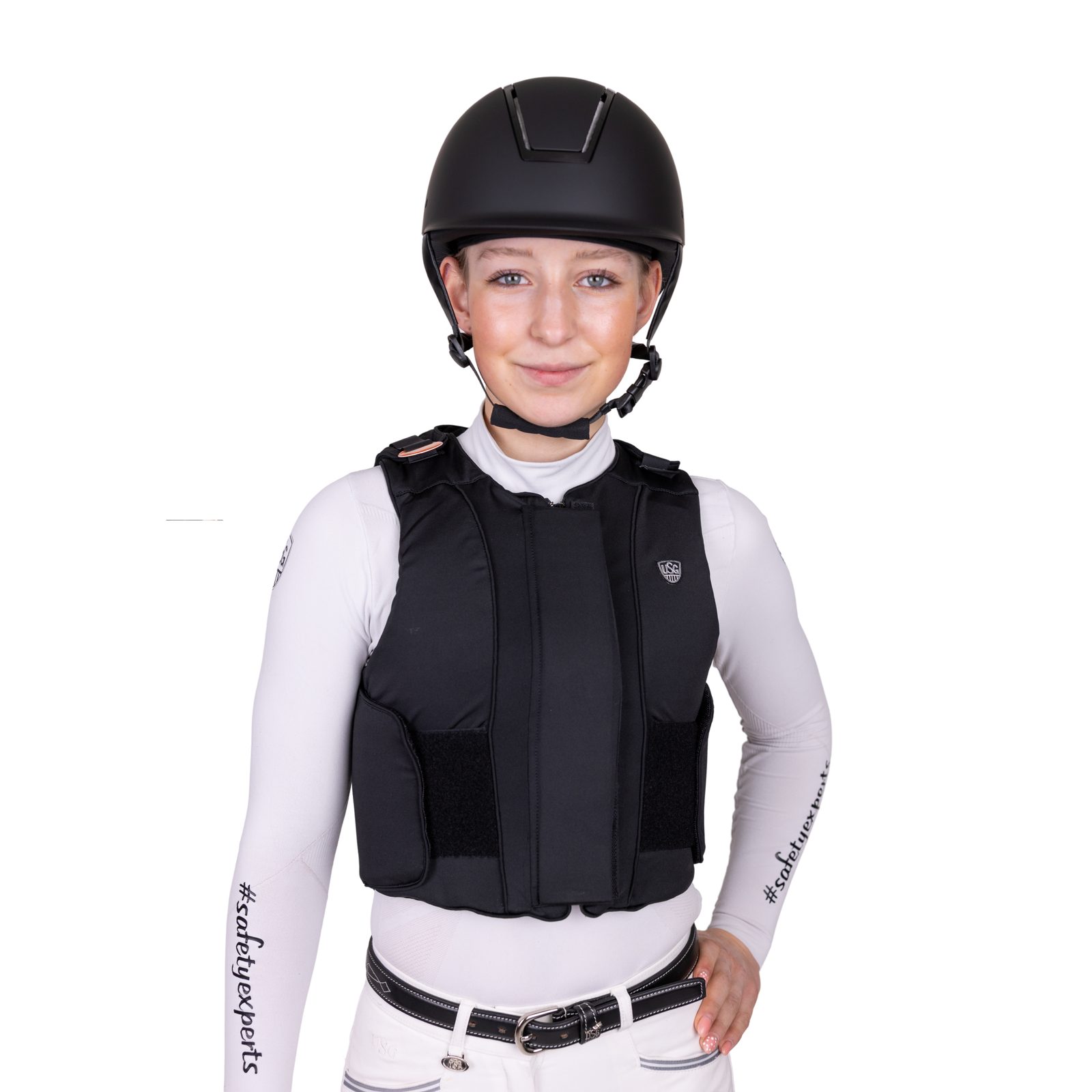
USG
USG Back Protector Precto Future Fit Green
incl. 19% VAT, plus shipping
In stock now · delivery in 3–5 days
USG
USG Panel Body Protector Kids' Flexi Motion
incl. 19% VAT, plus shipping
In stock now · delivery in 3–5 days
USG
USG Panel Body Protector Flexi Motion Women's/Men's
incl. 19% VAT, plus shipping
In stock now · delivery in 3–5 days
Waldhausen
Waldhausen Reflective Gilet unisex
incl. 19% VAT, plus shipping
In stock now · delivery in 3–5 days
More topics
- Questions about horse rugs
- Questions about bits and bridles
- Questions about riding helmets
- Questions about riding boots and half chaps
- Questions about riding clothing
- Questions about brushing boots, bandages and overreach boots
- Questions about saddle accessories
- Questions about horse feeding
- Questions about grooming and the stable