
Questions about riding boots and half chaps
Here we answer the most frequently asked questions about riding boots, paddock boots and half chaps: fit, calf width and leg height, half chap sizes, care, winter riding boots and the rules for competitions. For riding you need at least ankle-high boots with a small heel. The most practical options are tall riding boots or paddock boots with half chaps.
By Julia Lühr, Ahrens Reitsport in Tangstedt · Updated
Why do you wear riding boots for riding?
Riding boots give your foot a secure position in the stirrup, stabilise the ankle joint and protect the leg. The small heel prevents your foot from sliding through the stirrup, and the long leg of the boot provides your leg with additional stability and protection.
The German Equestrian Federation (FN) therefore describes long riding boots as the most suitable footwear. Because the boot fits closely to your leg, your calf also has good contact with the horse. At the same time, the boot should allow your ankle to remain flexible and springy.
When do you need riding boots, or are paddock boots with half chaps enough to start with?
To begin with, paddock boots with half chaps are completely sufficient, and the German Equestrian Federation (FN) even calls this combination the best solution for beginners. According to the FN, anyone who is just starting out or only rides irregularly does not need to buy long riding boots straight away.
The paddock boots should cover your ankle and have a small heel. With classic, close-fitting riding breeches you also need half chaps. If you wear jodhpurs with a flared leg, you can ride in paddock boots alone. Trainers are unsuitable because they do not have a heel.
Do you need half chaps for riding?
If you wear paddock boots with close-fitting riding breeches, you need half chaps. They give your lower leg additional support and prevent the skin on your calf and ankle from being rubbed sore.
The German Equestrian Federation (FN) expressly warns against riding only with paddock boots and knee-high socks. Socks do not give the leg any support and pressure points or chafing can occur. Half chaps are available in smooth leather, suede and synthetic leather. If you wear long riding boots or ride in jodhpurs, you do not need half chaps.
What does chaps mean and what types are there?
The term chaps is an American abbreviation of the Spanish word chaparreras, a pair of leather trousers without a seat that Mexican riders wore over their trousers. They protected against rain, mud and thorny scrub.
In Western riding, chaps are still long leg coverings over the full length of the leg, for example tight shotguns or wide batwings. In English riding, on the other hand, mini chaps are common, in other words half chaps for the lower leg. Together with paddock boots they replace long riding boots.
Sources (2)
What size half chaps do I need?
To find the right size of half chaps you need two measurements: the length from the ankle to just below the back of the knee and the circumference at the widest part of the calf. You then use these values to choose the size from the chart for the relevant model.
Take your measurements wearing the riding breeches and socks that you will wear later, and at the time of day when you usually ride, because calves are often slimmer in the morning. Leather half chaps may feel tight at first because they will give with wear. This also applies to children. In our shop in Tangstedt you can try on half chaps or have them made to measure.
When are riding boots too tight?
Riding boots are too tight if they cause pain even with riding breeches and thin socks, rather than just feeling snug at first. A new leather boot should fit closely and you should feel some resistance when you close the zip.
Boots may feel slightly uncomfortable at first, because the leather will give with wear. A boot that is easy to close from the start or that slips on the leg will soon become too wide. Wear new boots for a while and let them warm up so that the leather can mould to your leg.
More in our guide: Measuring riding boots correctly: calf width, shaft height and foot length
When are riding boots too tall?
A riding boot is too tall if the leg of the boot still presses into the back of your knee when riding, even after it has been broken in. New leather riding boots can seem a little too tall at first, because the leather becomes softer as you wear them and the boot drops a little.
You should therefore add about 2 to 4 cm to the height measured from the heel to the back of the knee. If your measurement is between two sizes, choose the smaller one, because the boot should initially fit as tall and as close as possible. Measurements are taken in a sitting position with the knee at a right angle, Königs measures standing from the floor to the back of the knee.
More in our guide: Measuring riding boots correctly: calf width, shaft height and foot length
Sources (1)
What is a normal calf width, and what can I do if I have slim calves?
There is no uniform normal calf width. Each manufacturer defines its own widths for each model. The crucial point is your calf circumference at the widest point compared with the size chart for the riding boot.
For slim calves, models with specific width categories are helpful. Measure with a tape measure that lies loosely against the leg and follow the manufacturer’s measuring instructions, because some measure while you are sitting and others while you are standing. If none of the standard widths fits, made-to-measure riding boots are an alternative.
More in our guide: Measuring riding boots correctly: calf width, shaft height and foot length
Sources (1)
What is the difference between dressage boots and jumping boots?
Dressage boots are usually made from firmer leather and often have a high Spanish top that visually lengthens the leg. Jumping boots, on the other hand, are made from especially soft, supple leather and often have lacing on the foot.
According to the German Equestrian Federation (FN), this means that jumping boots are usually comfortable right from the start, while a dressage boot only moulds to the leg over time. Zips at the back make many models easier to put on and take off. High-quality leather boots of both types are very durable.
Sources (1)
What is a boot jack and what do you need it for?
A boot jack is a slightly angled board with a U-shaped cut-out that lets you take off tall boots without help from someone else. You place the heel of the boot in the cut-out, hold the board in place with your other foot and pull your leg out.
According to the German Equestrian Federation (FN), it is particularly helpful for riding boots without lacing and without a zip, as found on classic dressage boots. Do not pull too hard, otherwise the heel can be damaged.
How do I care for leather riding boots correctly?
You can care for leather riding boots by first removing dust and dirt with a soft brush or a slightly damp cloth, allowing the leather to dry at room temperature, then applying leather care sparingly. Once it has been absorbed, polish with a soft cloth.
Never dry the boots on a radiator or in the sun, otherwise the leather will become brittle and cracked. Store them without creases and in conditions that are neither too damp nor too dry, because both can damage the leather. You should clean zips regularly. Always test new care products first on an inconspicuous area.
What should I look for in winter riding boots?
With winter riding boots, besides a warm lining, you should above all make sure that the boot fits safely in your stirrups. According to the British Horse Society there should be about 1.3 cm of space between the widest part of your foot and the stirrup.
Depending on your footwear you may need a larger stirrup for this. The sole should not have a coarse tread that could get caught in the stirrup and it should have a small heel. Try on winter boots with the thick socks that you wear in winter.
Sources (2)
Can you ride in normal wellington boots?
According to the British Horse Society, normal wellington boots are unsuitable for riding. Yard boots with a heavy tread can also get caught in the stirrup so that your foot remains trapped in the event of a fall.
It is different with rubber riding boots. They are made specifically for riding and, according to the German Equestrian Federation (FN), are an inexpensive solution for beginners. For handling horses, the Social Insurance for Agriculture, Forestry and Horticulture (SVLFG) recommends safety boots of at least category S2 with a protective toecap. If you switch between yard and saddle, you should change into riding footwear before you get on.
May I wear paddock boots with half chaps at competitions?
Yes, paddock boots with half chaps are permitted at competitions if the combination looks like riding boots. According to the German Equestrian Federation (FN), only dark colours are allowed, that is black, dark brown or dark blue.
Pay particular attention to your spurs: with paddock boots and half chaps they easily slip upwards, but under the German competition rules (LPO) they may only be horizontal or pointing downwards. Show jumpers in particular value this combination because it allows a lot of mobility in the ankle. The valid version of the German competition rules (LPO) is decisive.
When are made-to-measure riding boots worthwhile?
Made-to-measure riding boots are especially worthwhile if no combination of shoe size, calf width and boot height in standard models fits your leg. This can be the case, for example, with very slim or very muscular calves or an unusual leg length.
Standard boots are usually only available in fixed width and height categories. A made-to-measure boot is created in many individual steps, and in a workshop a pair can take up to 20 working hours. At our shop in Tangstedt we take measurements for boots and half chaps and order the made-to-measure item from the manufacturer.
More in our guide: Measuring riding boots correctly: calf width, shaft height and foot length
Sources (1)
What kind of sole should riding shoes and paddock boots have?
Riding shoes and paddock boots should have a continuous sole with no gap between heel and toe, and a small heel. This prevents anything from getting caught on the stirrup and stops your foot from slipping through.
The British Horse Society recommends a heel of at least about 1.3 cm and an offset tread that does not run straight across the whole sole. According to the German Equestrian Federation (FN), the tread should be fairly flat so that your foot can easily slip out of the stirrup if necessary. The shoe must enclose the ankle.
Can’t find your question?
Ask us: in our shop in Tangstedt, by phone on +49 4109 252173 or via the contact form. Personal advice is also available under Services.
From our range
Matching products
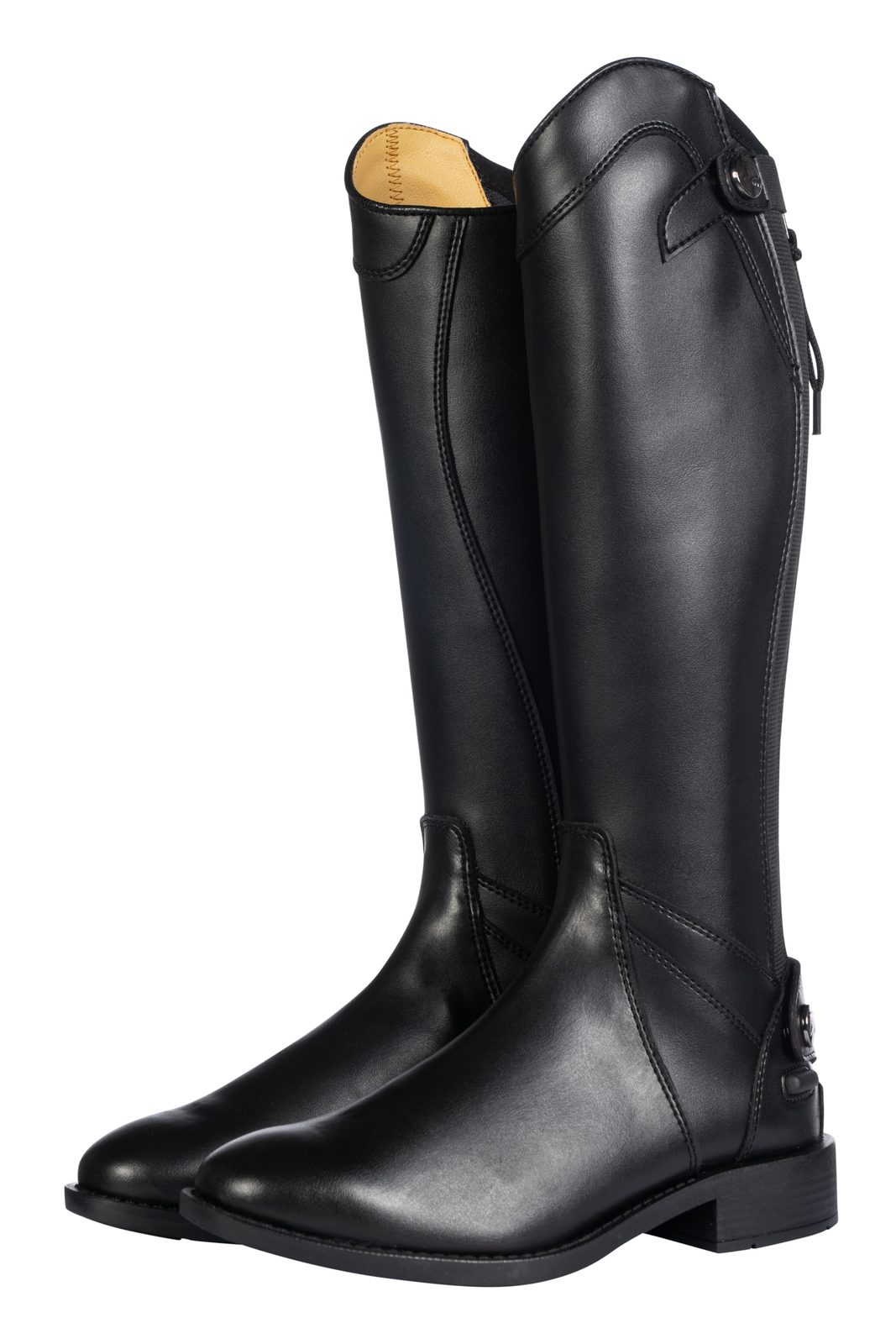
HKM
HKM Kids' Riding Boots Aberdeen standard height/narrow
incl. 19% VAT, plus shipping
In stock now · delivery in 3–5 days
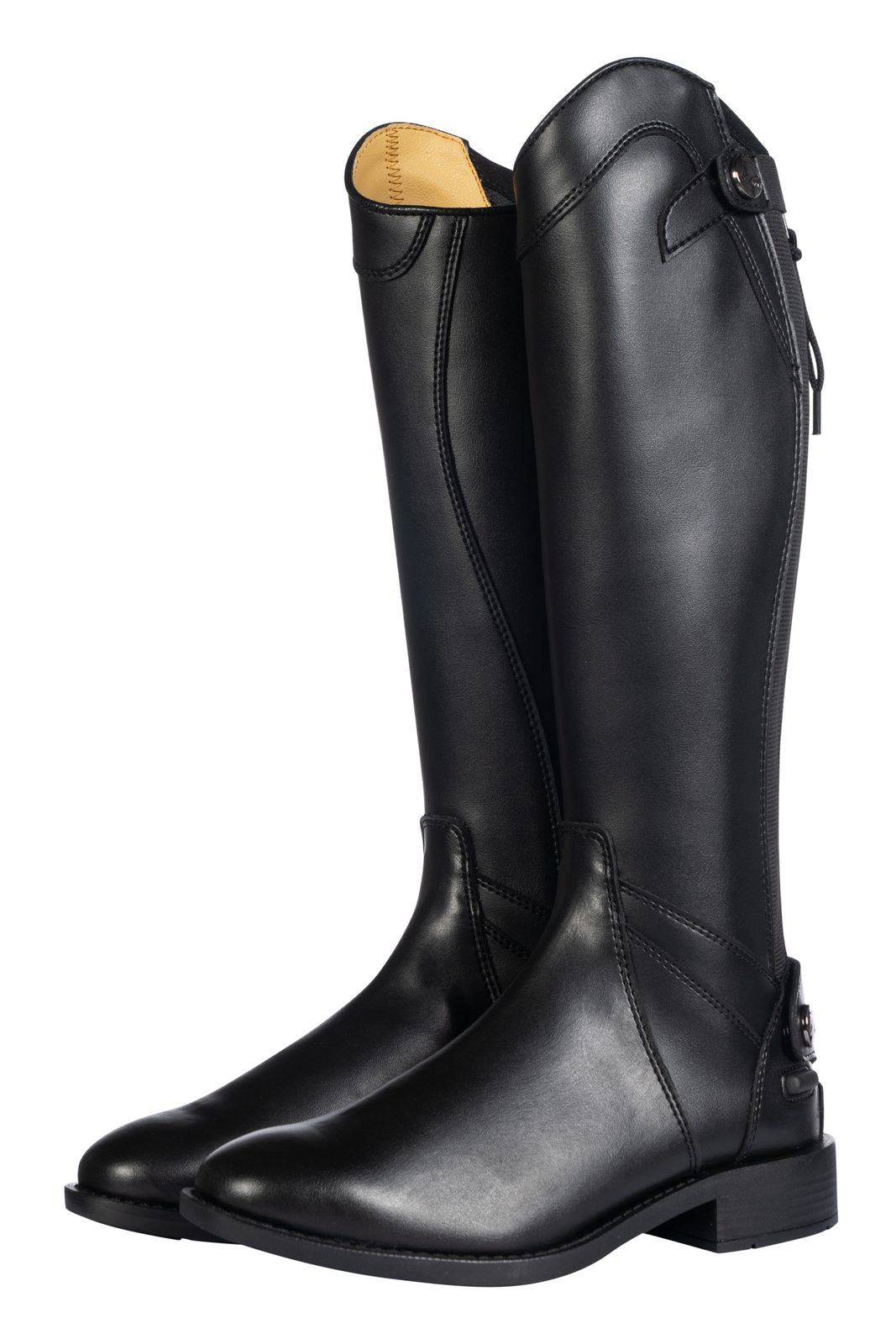
HKM
HKM Kids' Riding Boots Aberdeen long/narrow
incl. 19% VAT, plus shipping
In stock now · delivery in 3–5 days
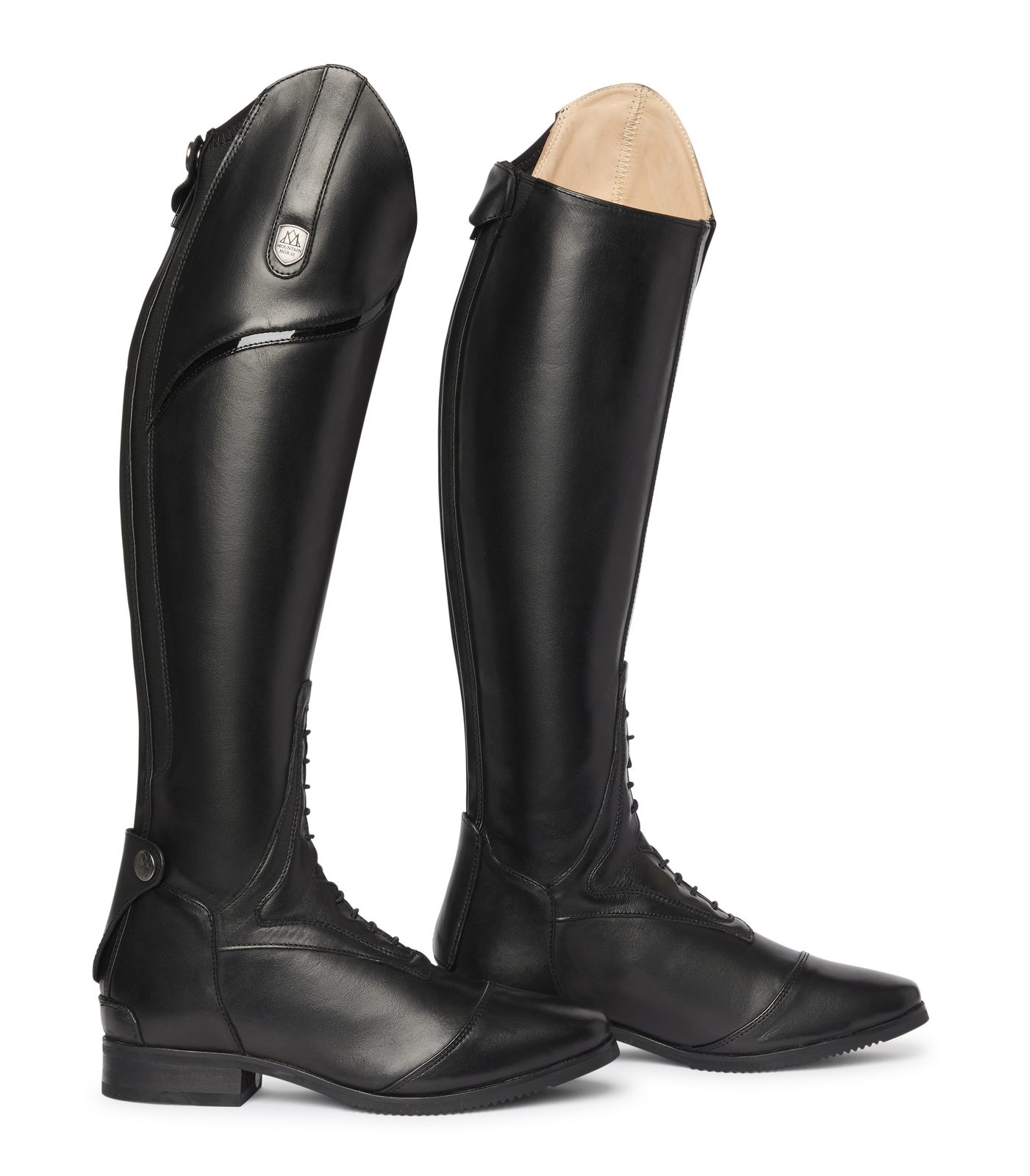
Mountain Horse
Mountain Horse Sovereign Riding Boots TR black
incl. 19% VAT, plus shipping
In stock now · delivery in 3–5 days
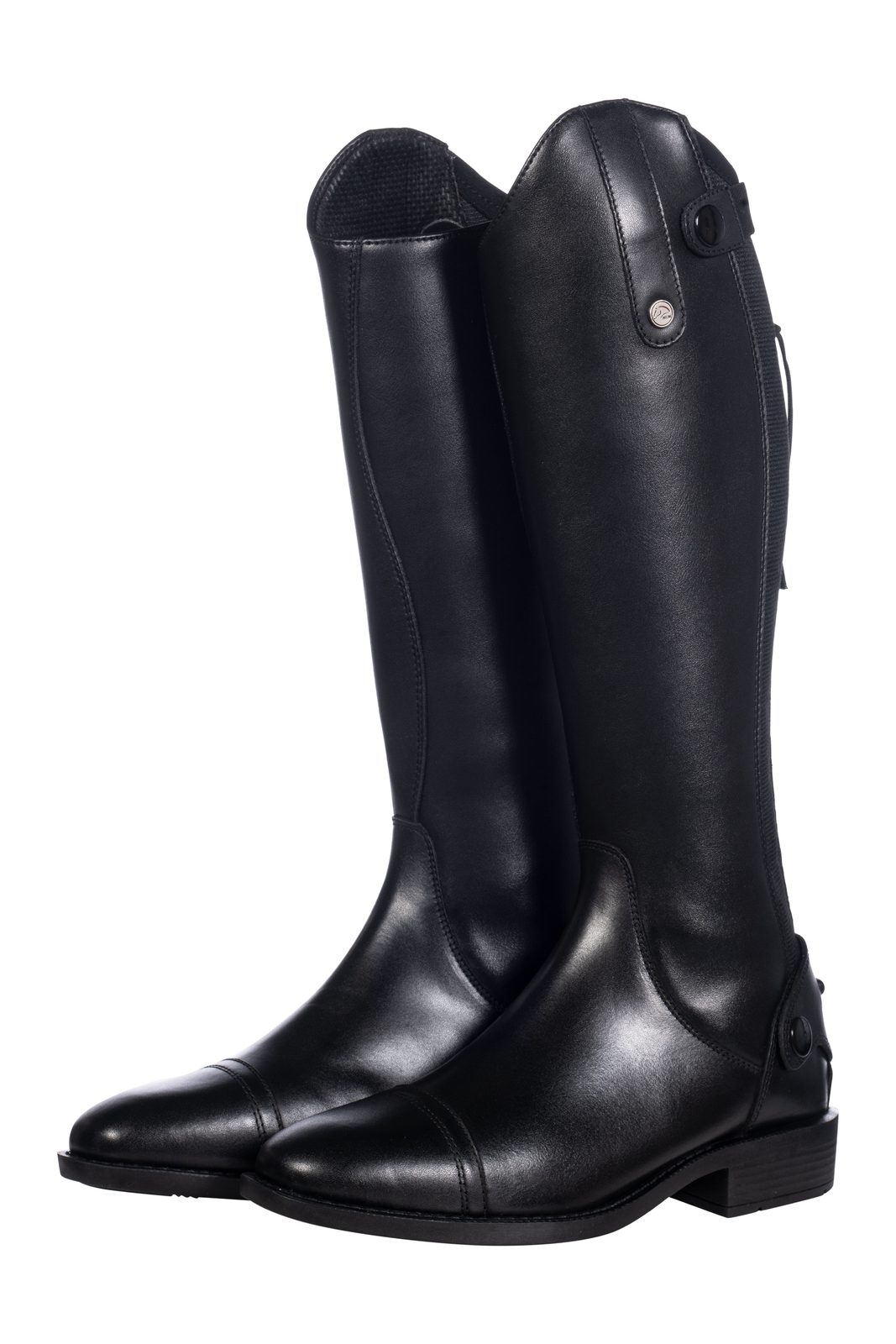
HKM
HKM Riding Boots Julie Kids standard length/narrow
incl. 19% VAT, plus shipping
In stock now · delivery in 3–5 days
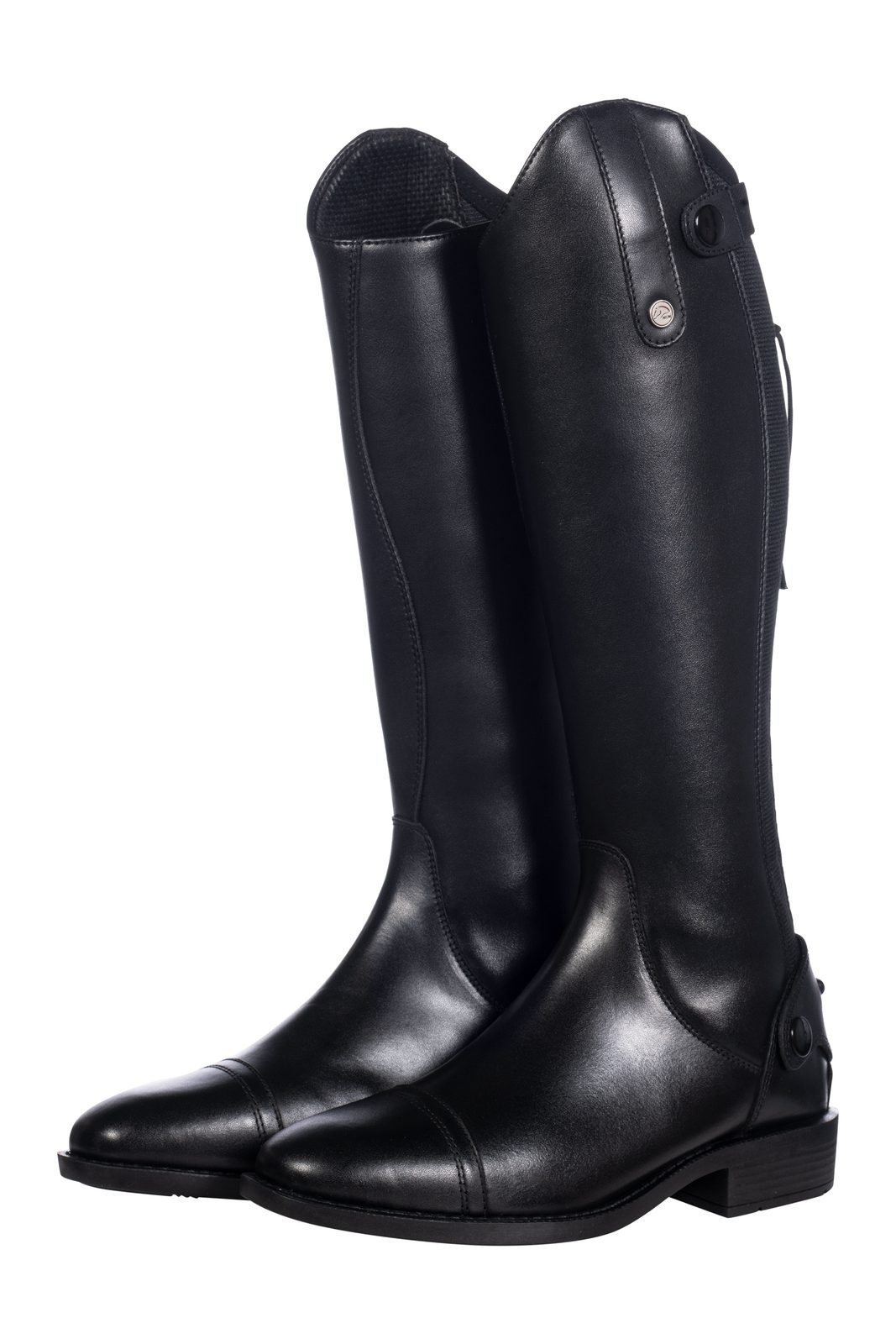
HKM
HKM Riding Boots Julie Kids standard length/wide
incl. 19% VAT, plus shipping
In stock now · delivery in 3–5 days
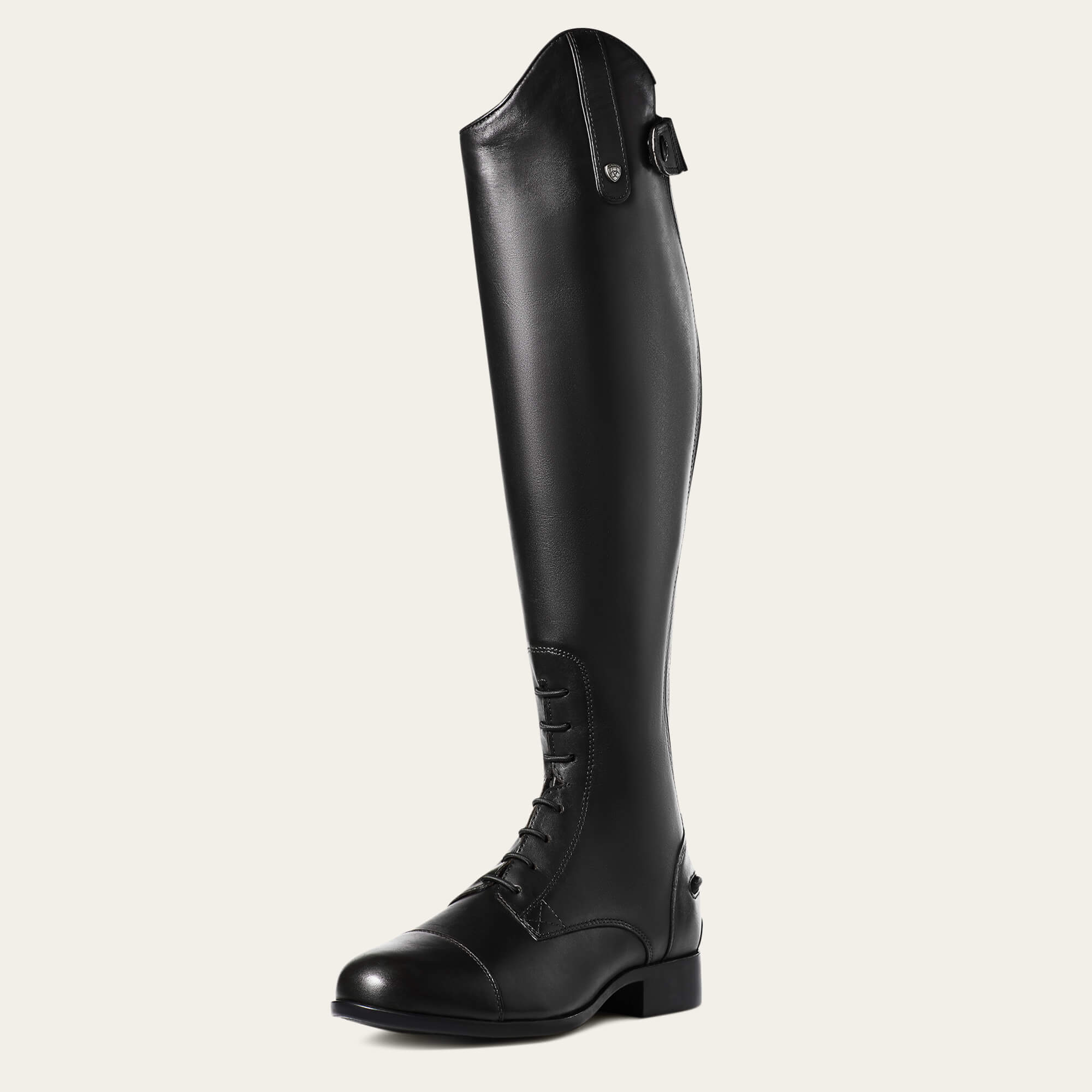
Ariat
Ariat Riding Boots Heritage Contour 2 XSM black
incl. 19% VAT, plus shipping
In stock now · delivery in 3–5 days
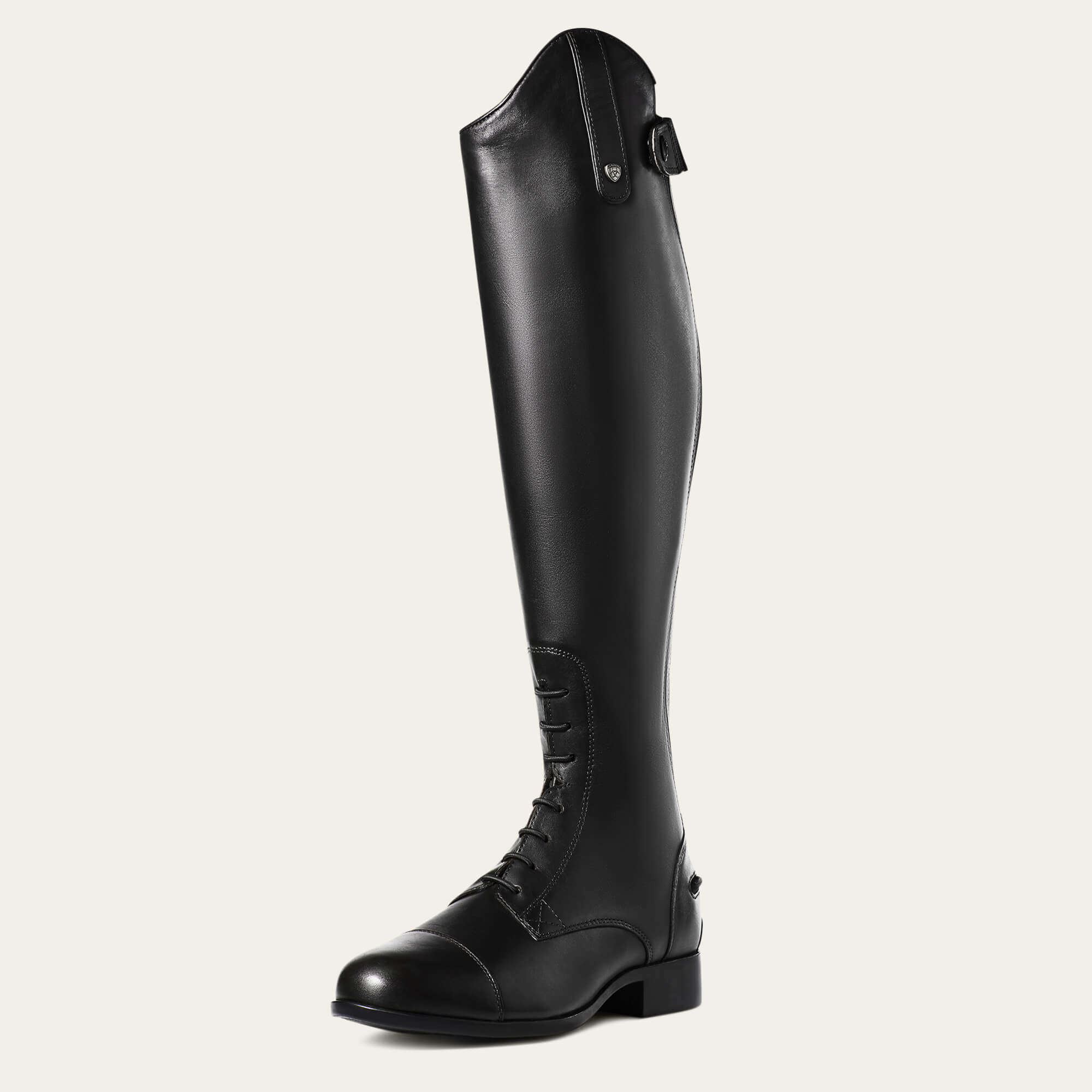
Ariat
Ariat Riding Boots Heritage Contour 2 FM black
incl. 19% VAT, plus shipping
In stock now · delivery in 3–5 days
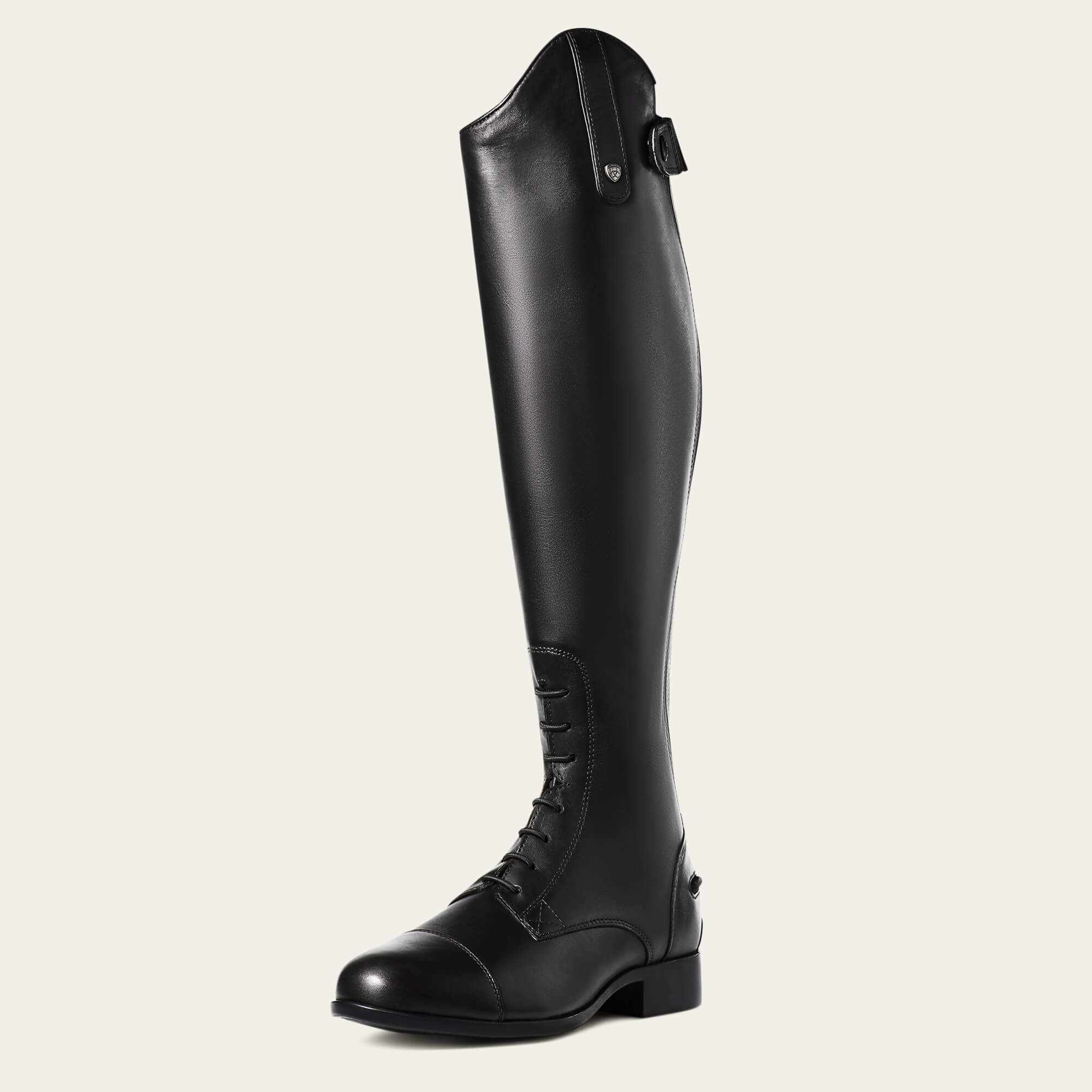
Ariat
Ariat Riding Boots Heritage Contour 2 FT black
incl. 19% VAT, plus shipping
In stock now · delivery in 3–5 days
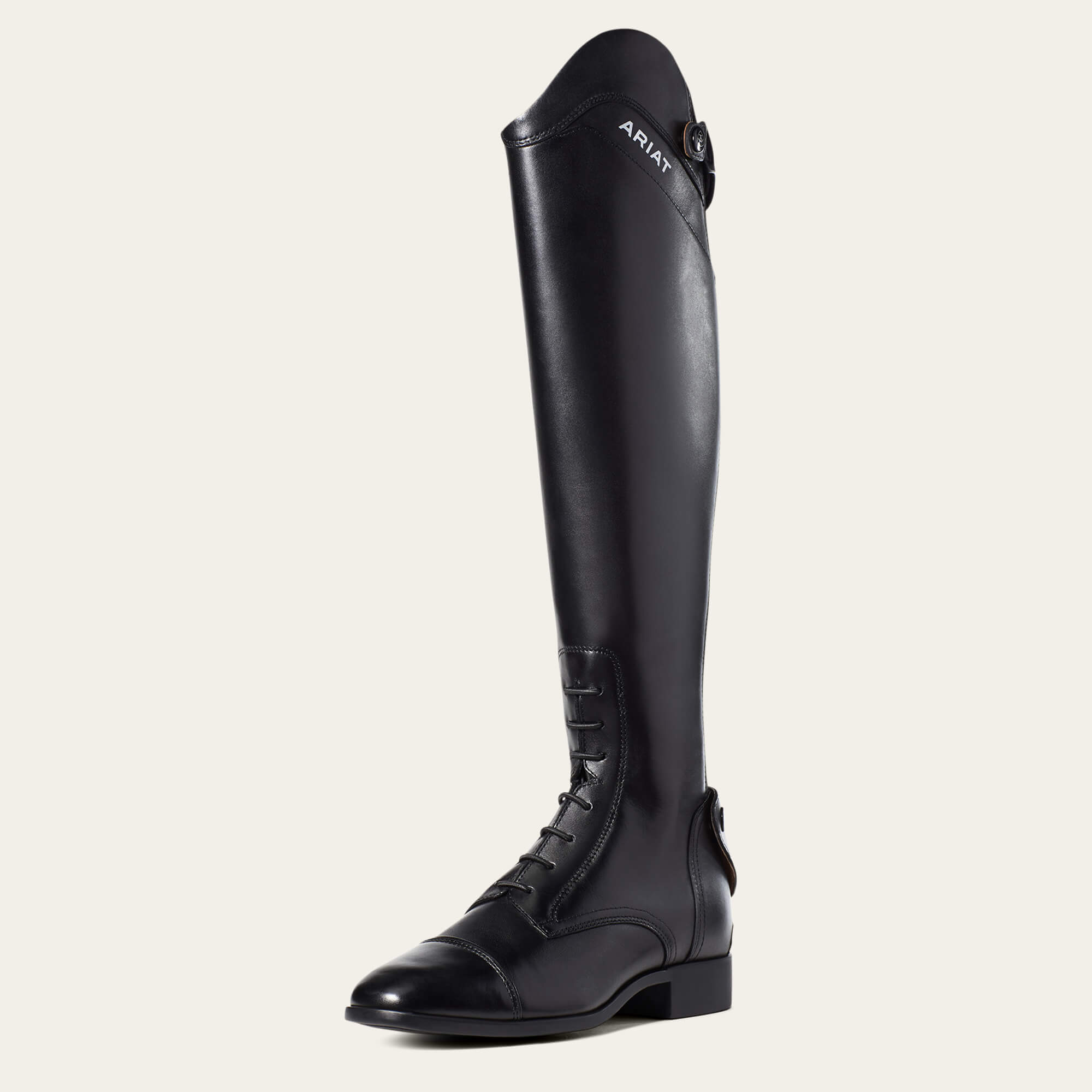
Ariat
Ariat Riding Boots Palisade FM black
incl. 19% VAT, plus shipping
In stock now · delivery in 3–5 days
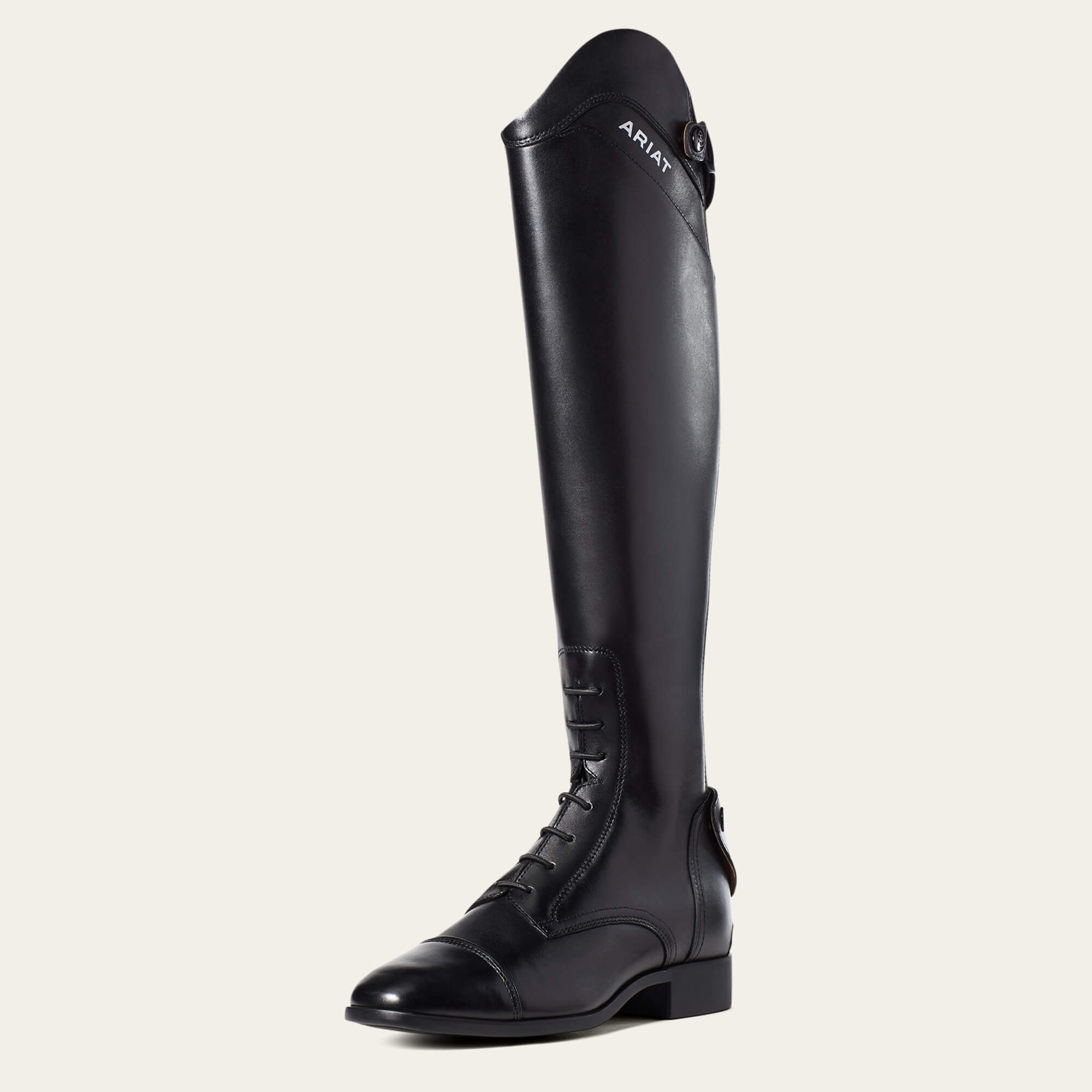
Ariat
Ariat Riding Boots Palisade FT black
incl. 19% VAT, plus shipping
In stock now · delivery in 3–5 days
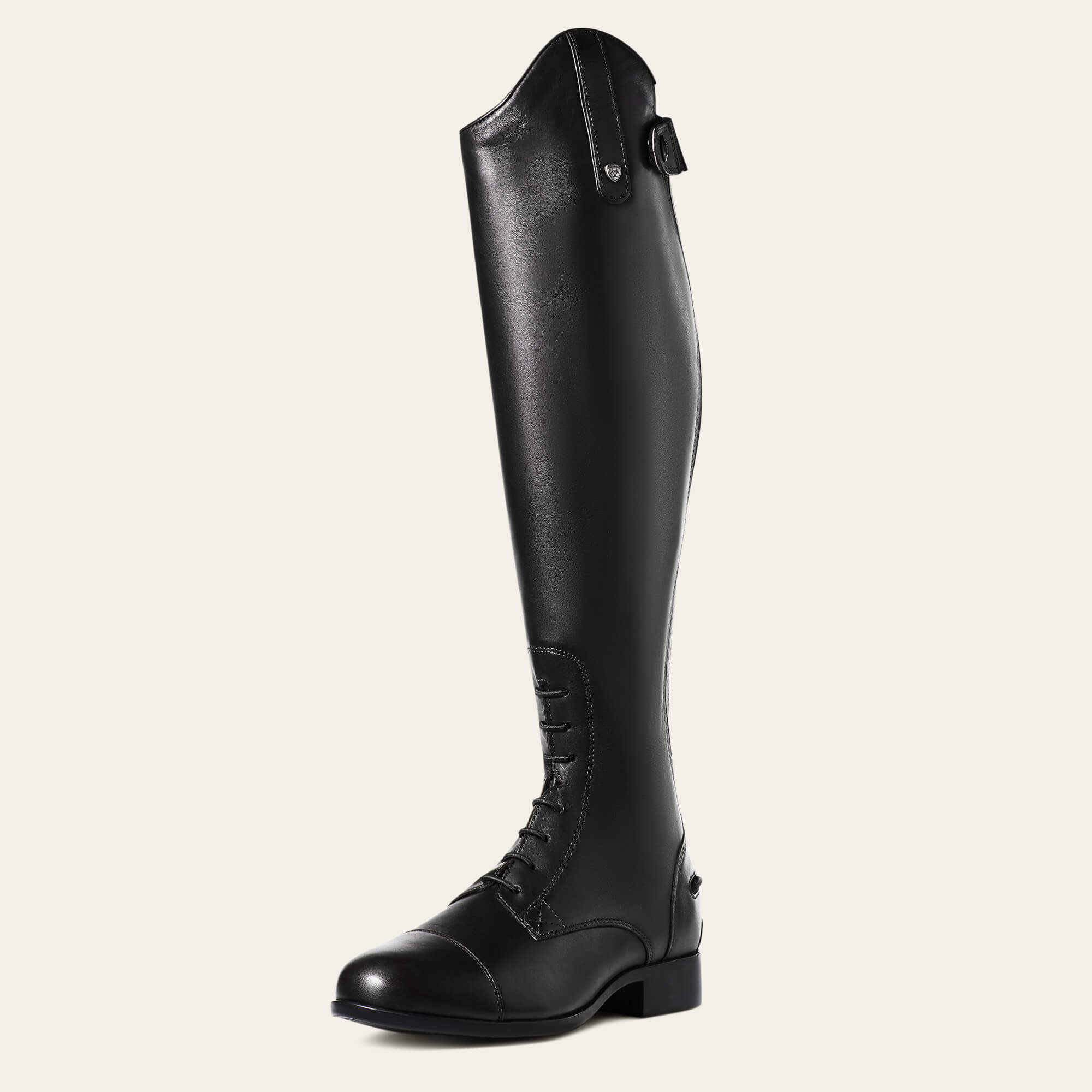
Ariat
Ariat Riding Boots Heritage Contour 2 RM black
incl. 19% VAT, plus shipping
In stock now · delivery in 3–5 days
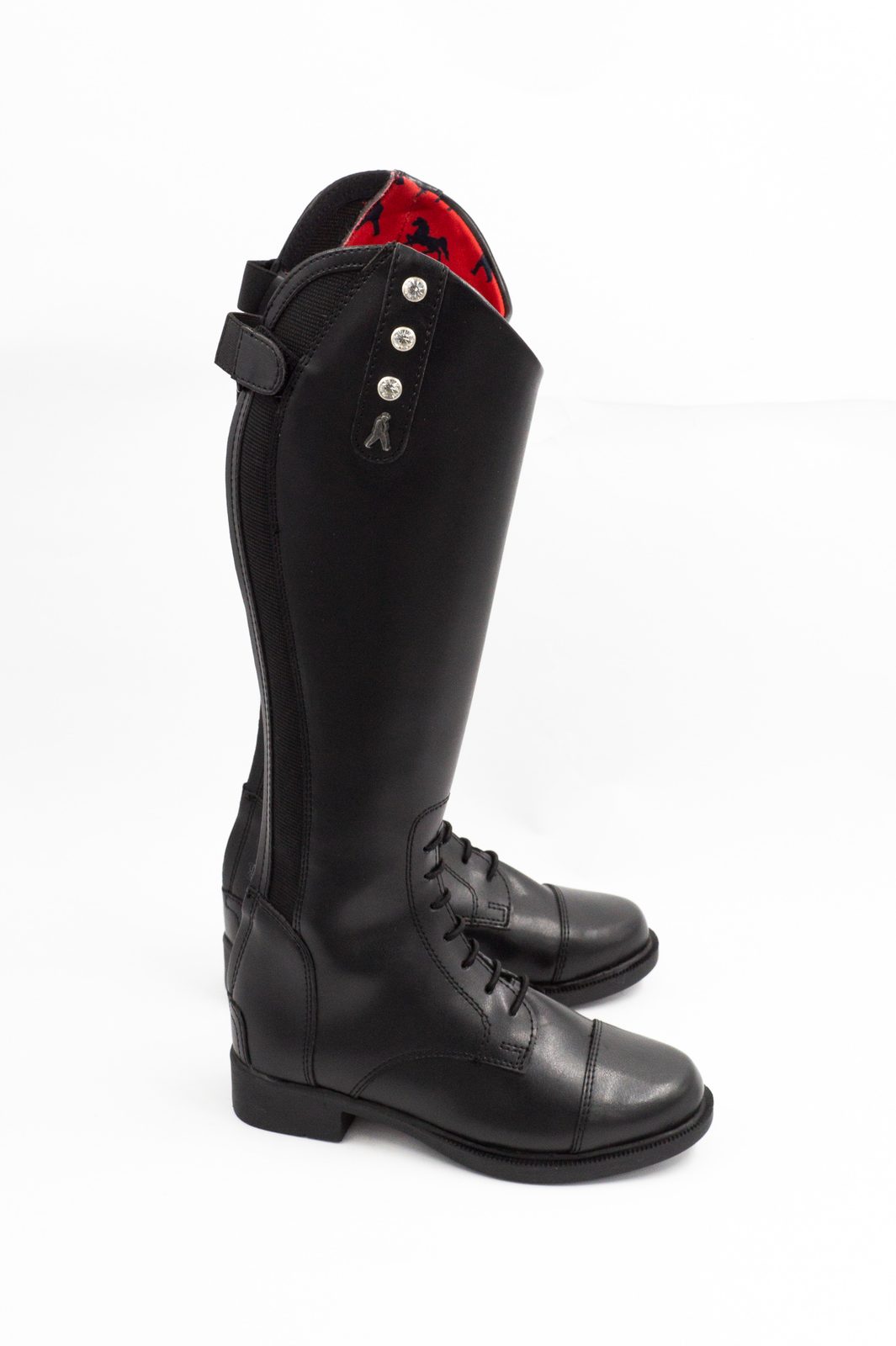
HOBO
Hobo Kids' Riding Boots Smart Bling
incl. 19% VAT, plus shipping
In stock now · delivery in 3–5 days
All 56 products
take a look
More topics
- Questions about horse rugs
- Questions about bits and bridles
- Questions about riding helmets
- Questions about body protectors
- Questions about riding clothing
- Questions about brushing boots, bandages and overreach boots
- Questions about saddle accessories
- Questions about horse feeding
- Questions about grooming and the stable